Blog

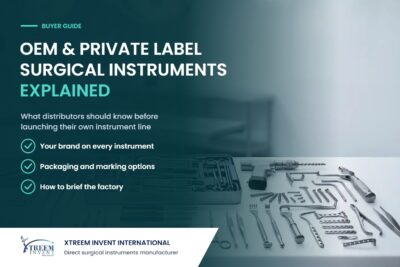
Many of the surgical instrument brands sold by distributors are made by specialist factories under OEM or private label agreements. If you sell instruments and want your own line, this guide explains how the two models work and what to settle with the factory before the first order.
OEM and private label: what is the difference?
- Private label means the factory makes its existing patterns and marks them with your brand. It is the fastest way to launch a line, because the designs already exist.
- OEM means the factory makes instruments to your own design or specification. You control the pattern, and the factory produces it for you.
Many distributors use both: private label for standard instruments, and OEM for the few patterns that set their range apart.
What can carry your brand
- Instrument marking: your name or logo, usually laser marked or etched.
- Reference numbers: your own catalogue codes on each instrument.
- Packaging: pouches, boxes and labels in your design.
- Sets: a sterilisation tray laid out and labelled as your set.
What to agree before the first order
- Specification. Pattern, dimensions, steel and finish for every item, confirmed in writing.
- Marking artwork. Supply your logo as a vector file and state its position and size.
- Quantities. First order and expected repeat volumes.
- Samples. Approve a marked sample before bulk production.
- Delivery time. Agree it for the first order and for reorders.
- Documents. Ask which certificates and declarations will accompany the goods.
- Exclusivity. For your own designs, confirm the factory will make them only for you.
Your responsibilities as the brand owner
When instruments carry your name, regulators in your market may treat you as responsible for them. Requirements differ by country and by product, so check the rules that apply to you with the relevant authority or a regulatory adviser before you launch.
Common mistakes
- Sending a low-resolution logo, which gives a poor marking.
- Approving from photos instead of a physical sample.
- Leaving packaging decisions until after production.
- Choosing a trader who cannot make changes quickly.
OEM and private label at Xtreem Invent
Xtreem Invent International manufactures surgical instruments in its own factory in Sialkot, Pakistan, and supplies distributors in the USA and worldwide under their own brands. To discuss a private label range or an OEM design, visit custom surgical instruments or contact our team.

Chief Executive Officer (CEO)
Zi-Jah Chaudery is the Chief Executive Officer (CEO) at Xtreem Invent, bringing over 20 years of core expertise in the surgical instruments and medical devices manufacturing sector. A visionary leader in international trade and global B2B healthcare exports, he specializes in supply chain management, compliance, and international quality standards. Under his leadership, Xtreem Invent connects premium Pakistani manufacturing with healthcare facilities worldwide.