Blog

Dental extraction forceps are identified by numbers, and the numbers can be confusing. Each number refers to the tooth and the arch the forceps is shaped for, not to a brand. This guide explains the most common forceps numbers, which teeth they fit, and how to build a practical extraction kit.
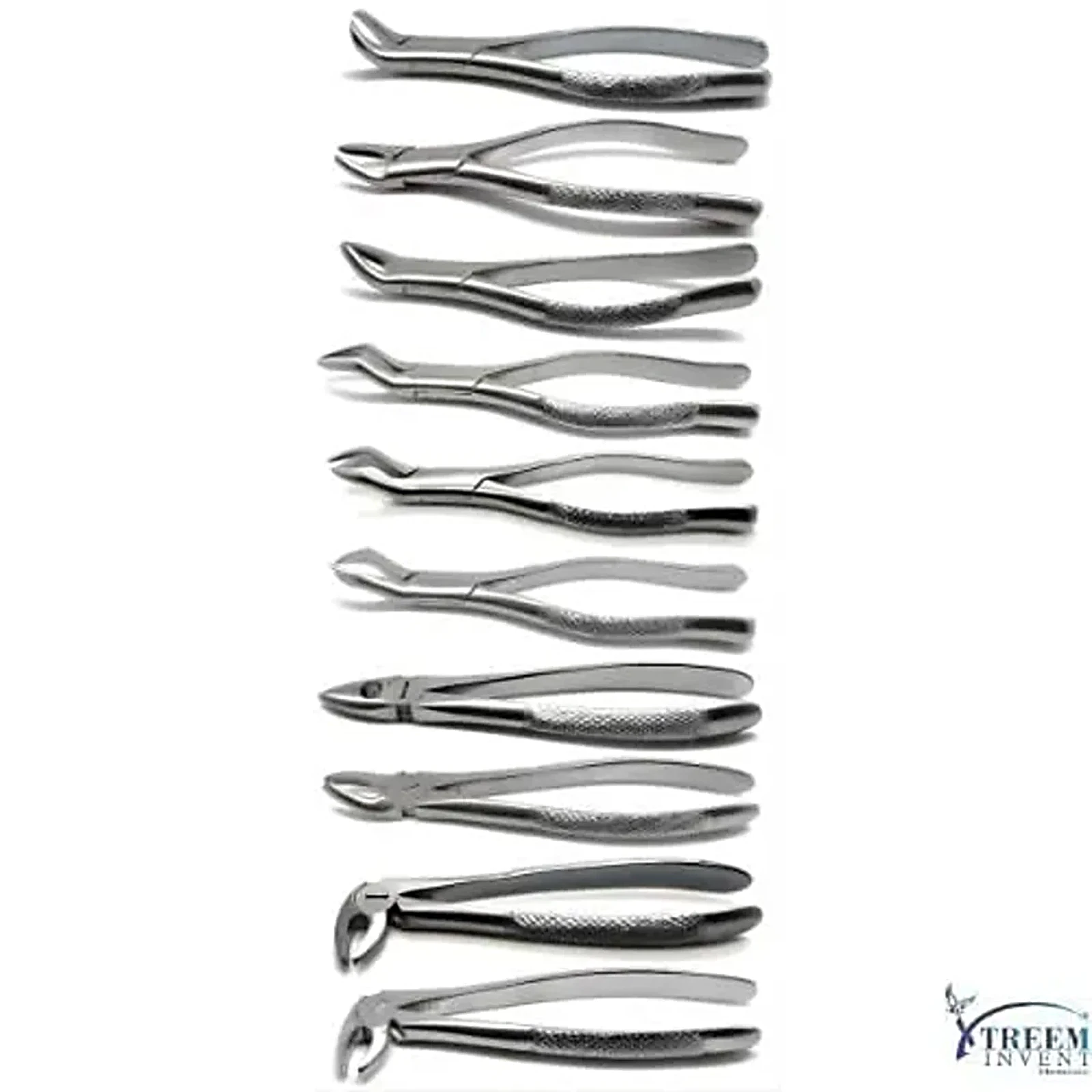
Dental extraction forceps chart
| Forceps number | Arch | Used for |
|---|---|---|
| 150 | Upper | Universal upper forceps for incisors, canines and premolars |
| 151 | Lower | Universal lower forceps for incisors, canines and premolars |
| 150S / 151S | Upper / lower | Smaller versions, often used for children’s teeth |
| 53R / 53L | Upper | Upper first and second molars, right and left |
| 88R / 88L | Upper | Upper molars, with a pointed buccal beak that engages the root furcation |
| 18R / 18L | Upper | Upper molars, right and left |
| 17 | Lower | Lower molars |
| 23 | Lower | Lower molar “cowhorn” with pointed beaks that enter the bifurcation |
| 65 | Upper | Bayonet-style forceps for upper roots and narrow teeth |
| 74N | Lower | Lower roots and crowded incisors |
Upper molar forceps come in right and left pairs because the roots on the cheek side of upper molars are shaped differently on each side.
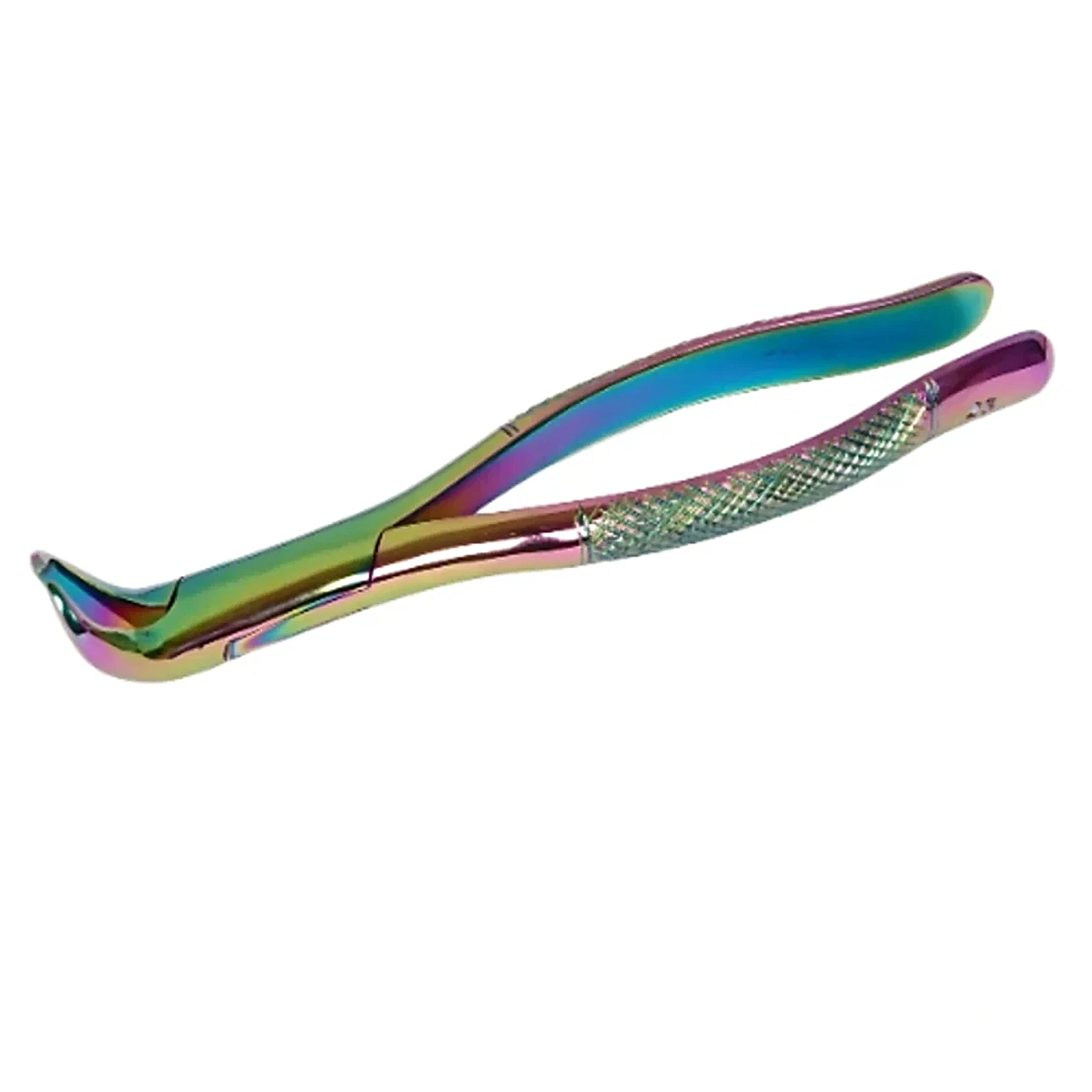
Cowhorn forceps
The No. 23 cowhorn forceps is one of the most recognisable dental instruments. Its two pointed beaks slide into the space between the roots of a lower molar. As the handles close, the beaks push into the bifurcation and lift the tooth. It is especially useful for lower molars with badly broken-down crowns.
Dental elevators
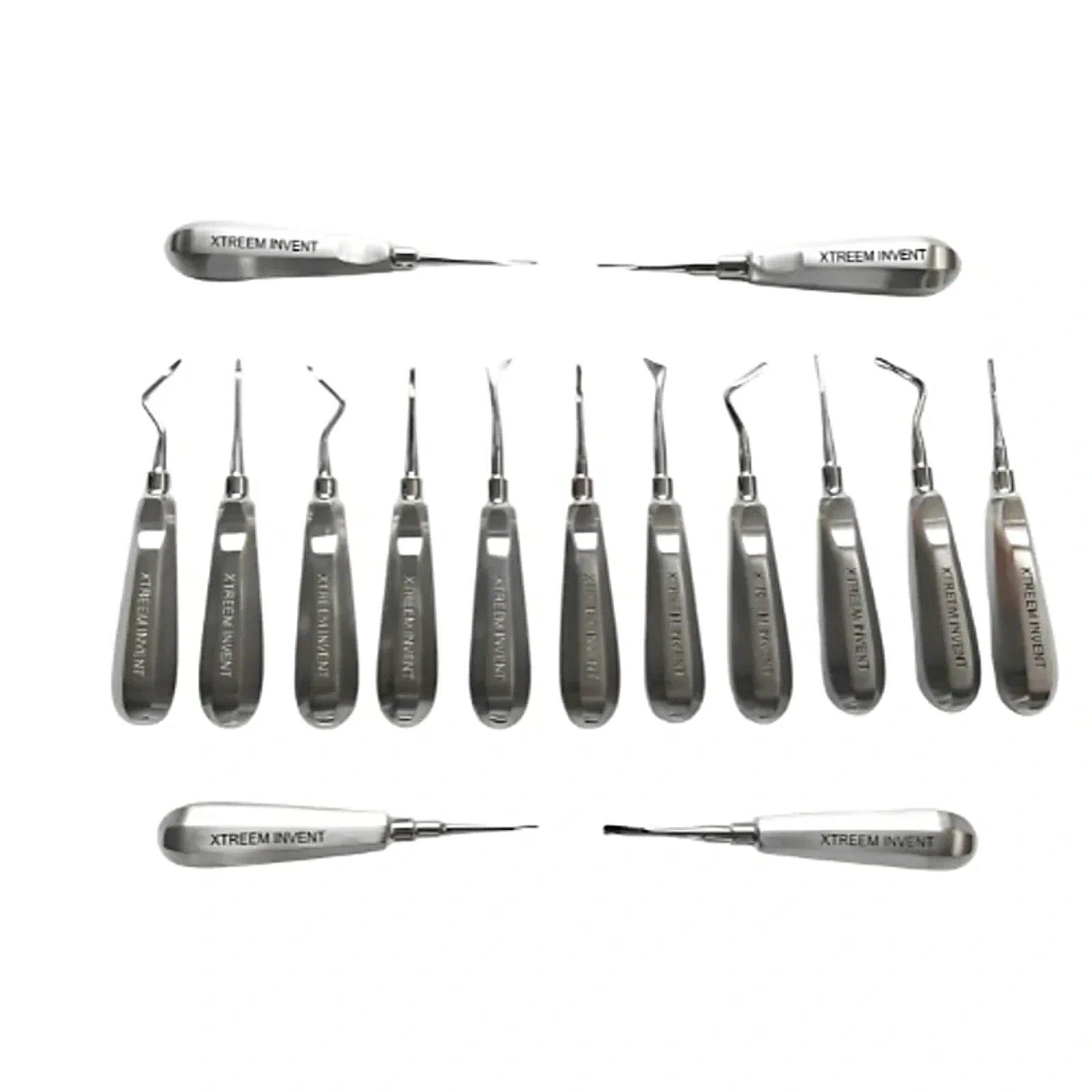
Elevators are used before or alongside forceps to loosen the tooth and root. Straight elevators work on single roots and between teeth, while angled and Cryer-style elevators reach roots that are harder to access. Most practices keep a set with several blade widths.
How to build an extraction kit
- Start with the universals: 150 for the upper arch and 151 for the lower arch cover most anterior teeth and premolars.
- Add molar forceps: a right and left pair for upper molars (for example 53R/53L or 88R/88L), plus 17 or 23 for lower molars.
- Add root forceps such as 65 for the upper arch and 74N for the lower arch.
- Include elevators in several sizes, both straight and angled.
- For children, add smaller patterns such as 150S and 151S.
- Check the beaks: they should meet evenly, grip the root without slipping and have a clean, consistent serration.
Care and maintenance
- Clean forceps and elevators straight after use, paying attention to the joint and the beak serrations.
- Open the joint fully during cleaning and follow your practice’s reprocessing procedures for steam sterilization.
- Lubricate the joint with an instrument lubricant suitable for sterilization.
- Check that the beaks still meet evenly. Worn or sprung beaks slip on the root and should be repaired or replaced.
Dental extraction instruments from Xtreem Invent
We manufacture dental instruments in our own factory in Sialkot, Pakistan, and supply dentists, clinics and distributors in the USA and worldwide. Our range includes a set of 10 dental extraction forceps, the No. 23 cowhorn forceps for lower molars, single extraction forceps in multiple patterns, a set of 15 dental elevators and a basic oral surgery kit. See all dental instruments.
Need a specific forceps number that is not listed? Send us the number or a photo and we will quote it as one of our custom instruments. Distributors can also order through our OEM and private label service.
Frequently asked questions
What is the difference between 150 and 151 forceps?
The 150 is the universal forceps for the upper arch, and the 151 is the universal forceps for the lower arch. Both are used for incisors, canines and premolars.
Why do upper molar forceps come in right and left versions?
The roots on the cheek side of upper molars differ on the right and left, so the beaks are shaped to match each side.
What are cowhorn forceps used for?
Cowhorn forceps such as the No. 23 are used for lower molars. Their pointed beaks enter the space between the roots and lift the tooth.
Do you ship dental instruments to the USA?
Yes. Catalogue items are delivered in 15 to 25 working days, not counting holidays. Shipping is a flat $49 per order and free on orders over $349.99.
Have a question or need a quote? Contact our team.

Chief Executive Officer (CEO)
Zi-Jah Chaudery is the Chief Executive Officer (CEO) at Xtreem Invent, bringing over 20 years of core expertise in the surgical instruments and medical devices manufacturing sector. A visionary leader in international trade and global B2B healthcare exports, he specializes in supply chain management, compliance, and international quality standards. Under his leadership, Xtreem Invent connects premium Pakistani manufacturing with healthcare facilities worldwide.