Blog

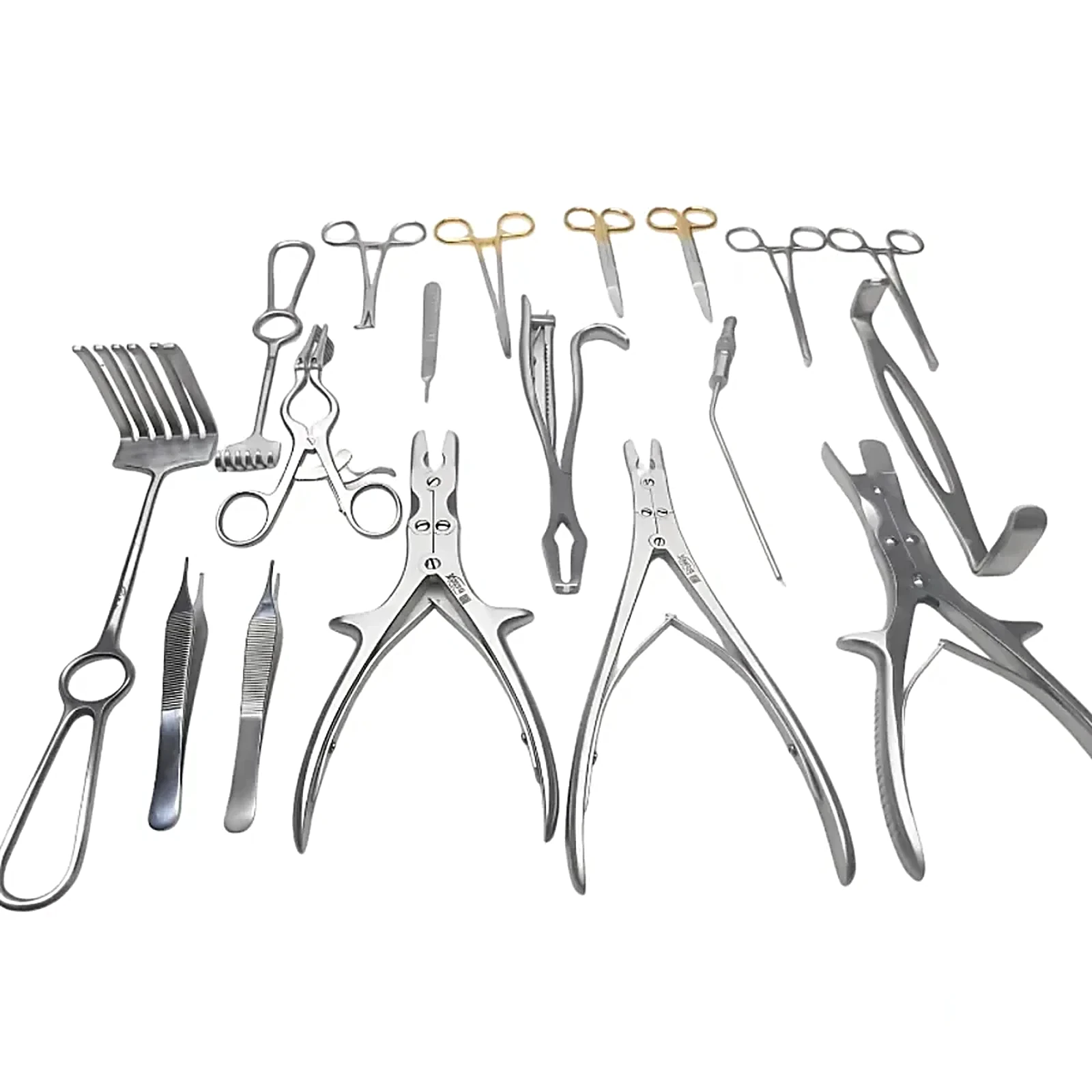
Orthopedic surgery uses a large and varied set of hand instruments, from forceps that hold a broken bone in place to rongeurs, osteotomes and wire cutters. This guide lists the main orthopedic instruments by group, explains what each one does, and gives practical tips for building and maintaining an orthopedic set.
Orthopedic instruments list by group
| Group | Common examples | What they do |
|---|---|---|
| Bone holding forceps | Lane, Verbrugge, Lowman clamp | Grip and hold bone fragments firmly during fixation. |
| Reduction forceps | Pointed (Weber) reduction forceps, serrated reduction forceps | Bring broken bone ends back into line and hold them while plates or screws are placed. |
| Retractors | Hohmann, Bennett, self-retaining retractors | Hold soft tissue and muscle away to expose the bone. |
| Elevators | Periosteal and Cobb elevators | Lift the periosteum and soft tissue off the bone surface. |
| Osteotomes and chisels | Straight, curved and gouge patterns | Cut or shape bone with a mallet. |
| Rongeurs and bone cutters | Stille-Luer, Liston and Liston-Key bone cutting forceps | Bite away or cut through bone. |
| Curettes | Bone curettes in several sizes | Scrape out bone, cyst lining or graft material. |
| Wire and pin instruments | Wire twisters, wire and pin cutters | Twist, tighten and cut cerclage wires and Kirschner wires. |
| Drilling and plating instruments | Hand drills, drill guides, plate benders, depth gauges | Prepare holes and shape plates for fracture fixation. |
| Mallets | Bone mallets | Drive osteotomes, chisels and impactors. |
Bone holding and reduction forceps
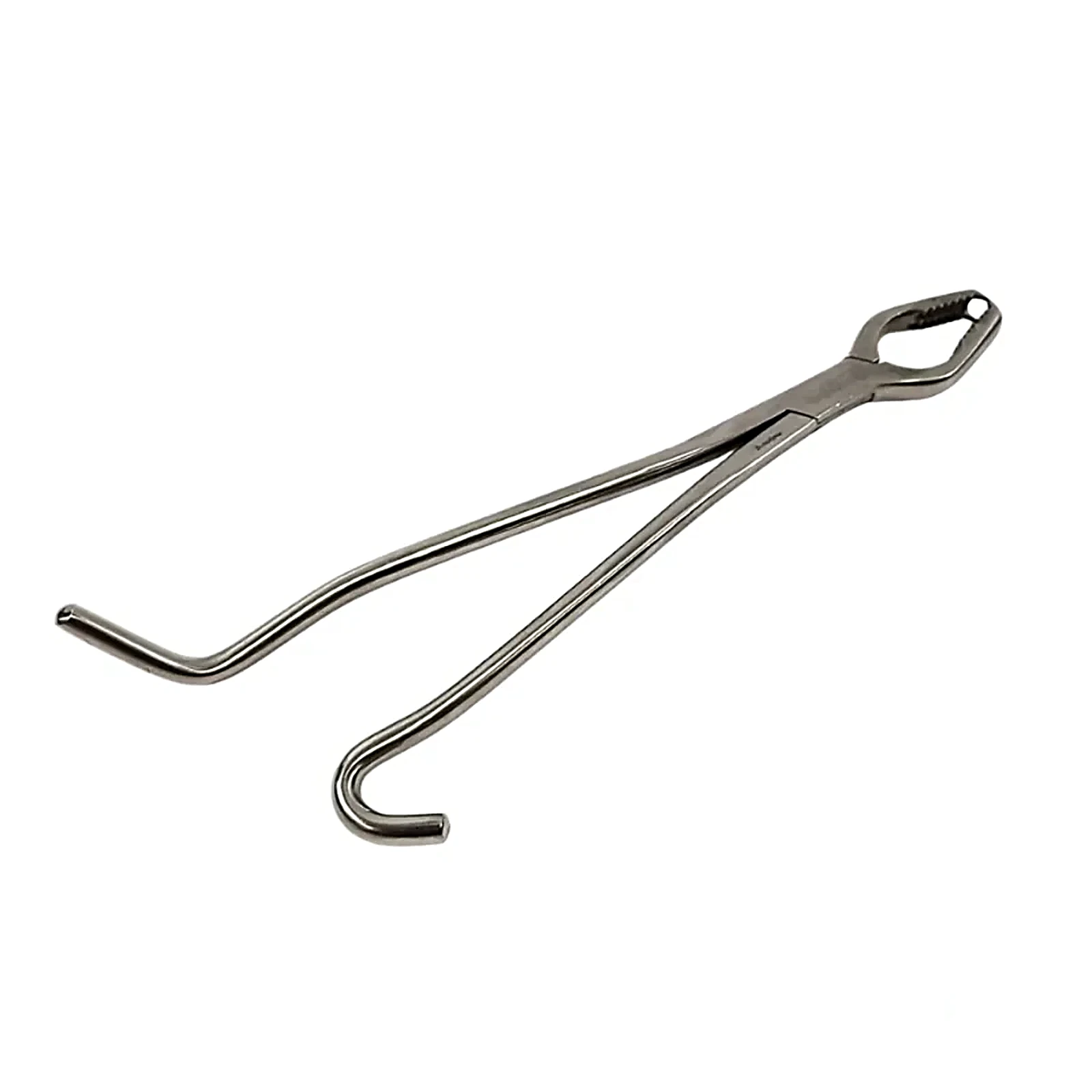
These are at the heart of every fracture tray. Bone holding forceps, such as the Lane pattern, grip the bone with strong serrated jaws, often with a ratchet to lock them. Pointed reduction forceps have sharp tips that sit in small points on the bone, which lets the surgeon line up the fracture and hold it while a plate or screws are fitted.
Cutting instruments
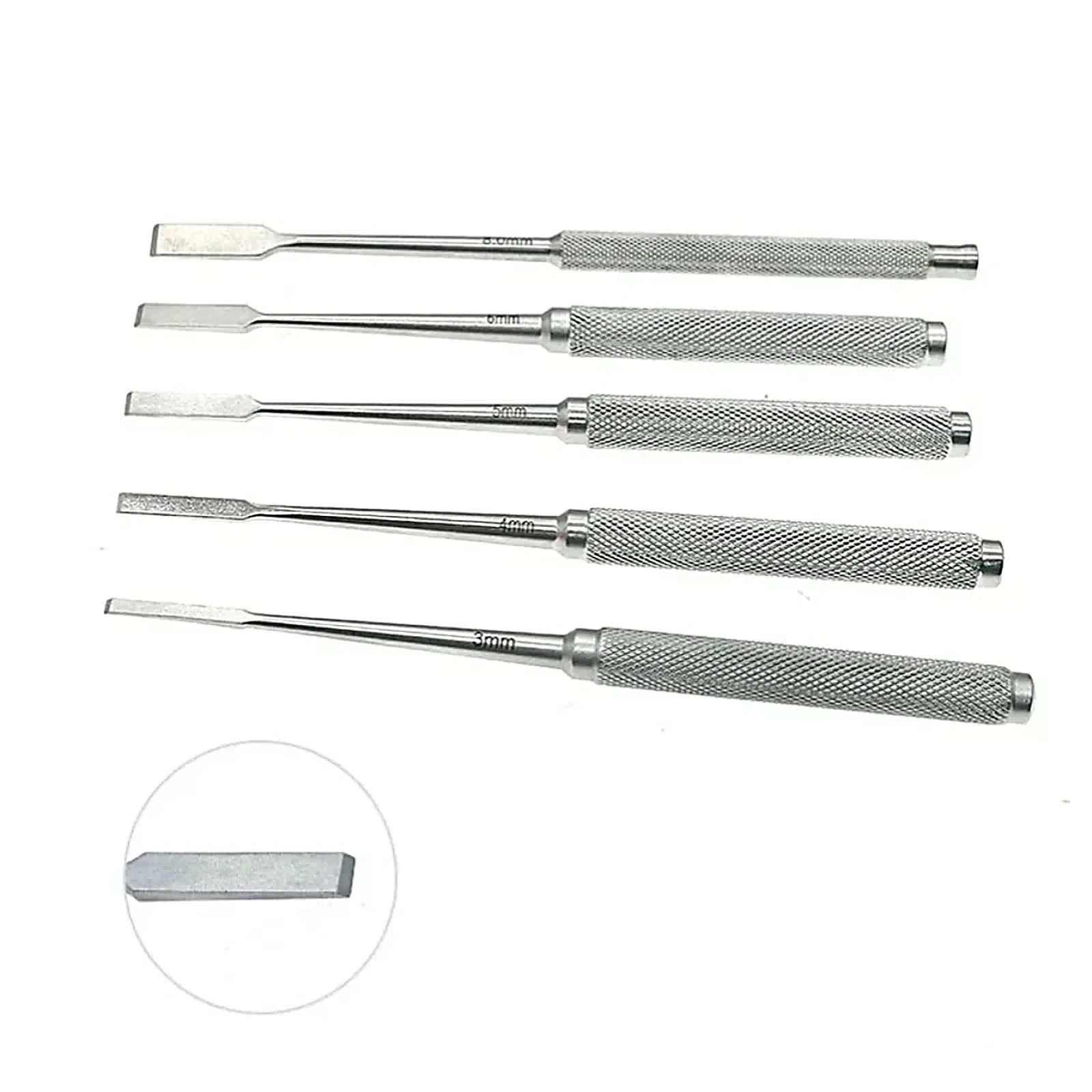
Osteotomes are used with a mallet to cut or shape bone. Straight osteotomes make flat cuts, while curved patterns and gouges remove bone in a scooped shape. Rongeurs bite away small pieces of bone, and bone cutting forceps such as the Liston pattern cut straight through ribs and small bones.
Retractors
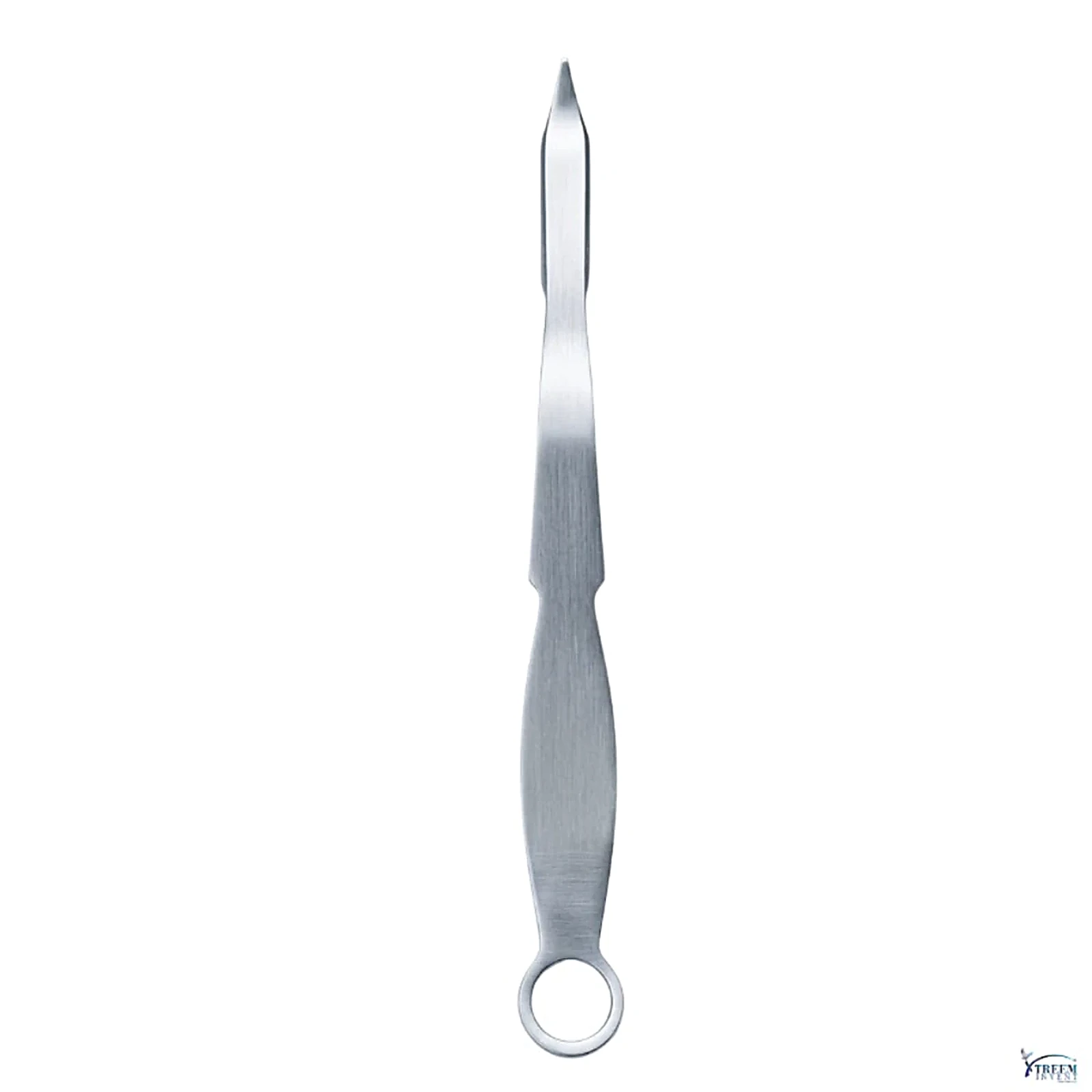
The Hohmann retractor is one of the most used orthopedic instruments. Its curved tip slides around the bone and levers the soft tissue away, giving a clear view of the fracture or joint. Most trays include several widths.
How to build an orthopedic set
- Start with the procedure. A small fragment set for hand and wrist fractures needs finer instruments than a large fragment set for femur or tibia work.
- Cover each step: exposure (retractors, elevators), reduction (reduction and bone holding forceps), fixation (drills, plate benders, wire instruments) and closure.
- Include several sizes of forceps, retractors and osteotomes.
- Check the jaws and tips: serrations should be even, ratchets should hold firmly and cutting edges should be sharp.
- Keep spares of the instruments that wear fastest, such as wire cutters and curettes.
Care and maintenance
- Clean instruments as soon as possible after surgery, before blood and bone dust dry in joints and serrations.
- Open joints and ratchets fully during cleaning and follow your facility’s reprocessing procedures for steam sterilization.
- Lubricate hinges with an instrument lubricant suitable for sterilization.
- Never use wire cutters on wire thicker than they are rated for, and never use osteotomes as levers.
Orthopedic instruments from Xtreem Invent
We manufacture orthopedic instruments in our own factory in Sialkot, Pakistan, and supply hospitals, surgery centers and distributors in the USA and worldwide. Our range includes Lane bone holding forceps, pointed reduction forceps, modified Hohmann retractors, bone osteotomes, the Stille-Luer bone rongeur, Liston-Key bone cutting forceps, the double action tungsten wire cutter, the cerclage wire twister and cutter, the orthopedic plate bending iron, the bone mallet and the mini fragment instrument kit. See all orthopedic instruments.
We also remake discontinued orthopedic instruments, including hip, knee and spine retractors. See our discontinued instruments and custom instruments services, or our OEM and private label service for distributors. For plate contouring, read our plate benders guide.
Frequently asked questions
What are the most common orthopedic instruments?
Bone holding and reduction forceps, Hohmann retractors, periosteal elevators, osteotomes, rongeurs, bone curettes, wire cutters, drills and a mallet appear in almost every orthopedic set.
What is the difference between bone holding forceps and reduction forceps?
Bone holding forceps grip the bone firmly with serrated jaws. Reduction forceps have pointed or narrow tips used to line up and hold a fracture while it is fixed.
Can you build an orthopedic set to our hospital’s list?
Yes. Send us your instrument list and we will quote the complete set.
Do you ship orthopedic instruments to the USA?
Yes. Catalogue items are delivered in 15 to 25 working days, not counting holidays. Shipping is a flat $49 per order and free on orders over $349.99.
Have a question or need a quote? Contact our team.

Chief Executive Officer (CEO)
Zi-Jah Chaudery is the Chief Executive Officer (CEO) at Xtreem Invent, bringing over 20 years of core expertise in the surgical instruments and medical devices manufacturing sector. A visionary leader in international trade and global B2B healthcare exports, he specializes in supply chain management, compliance, and international quality standards. Under his leadership, Xtreem Invent connects premium Pakistani manufacturing with healthcare facilities worldwide.