Blog

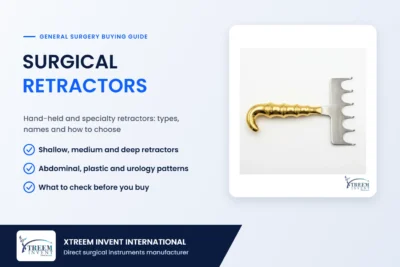
A retractor holds the edges of an incision, or an organ, out of the way so the surgeon can see and work. There are hundreds of patterns, but they fall into two groups: hand-held retractors, which an assistant holds, and self-retaining retractors, which lock open on their own. This guide explains the main hand-held types, the specialty retractors used in abdominal, plastic, urology, orthopaedic and neurosurgery, and what to check when you buy them.
Hand-held vs self-retaining retractors
| Hand-held | Self-retaining | |
|---|---|---|
| How it works | Held in place by an assistant or the surgeon | Locks open with a ratchet, frame or arm |
| Main advantage | Can be moved instantly as the dissection goes deeper | Frees the assistant’s hands and gives steady exposure for long periods |
| Examples | Senn, Army-Navy, Richardson, Deaver, Kelly, rakes, skin hooks | Weitlaner, Gelpi, Balfour, Masson-Judd, ring and table-mounted systems |
This guide focuses mainly on hand-held and specialty retractors. For ratchet and frame retractors, see our guides to self-retaining retractors and self-retaining ring retractors.
Hand-held retractors by depth
A simple way to sort hand-held retractors is by how deep the wound is:
- Shallow wounds: Senn retractors (a small right-angled blade at one end and a rake at the other), Army-Navy retractors (double-ended with two flat blades, usually used in pairs), skin hooks and small rakes. These hold skin and the layer just beneath it.
- Medium depth: the Richardson retractor, with a sturdy right-angled blade, is one of the most common general retractors for holding back the abdominal wall.
- Deep cavities: the Deaver (curved like a question mark), Kelly, Harrington and malleable ribbon retractors reach deep into the abdomen or chest to hold organs such as the liver or bowel aside.
Abdominal and body contouring retractors
Kelly retractor
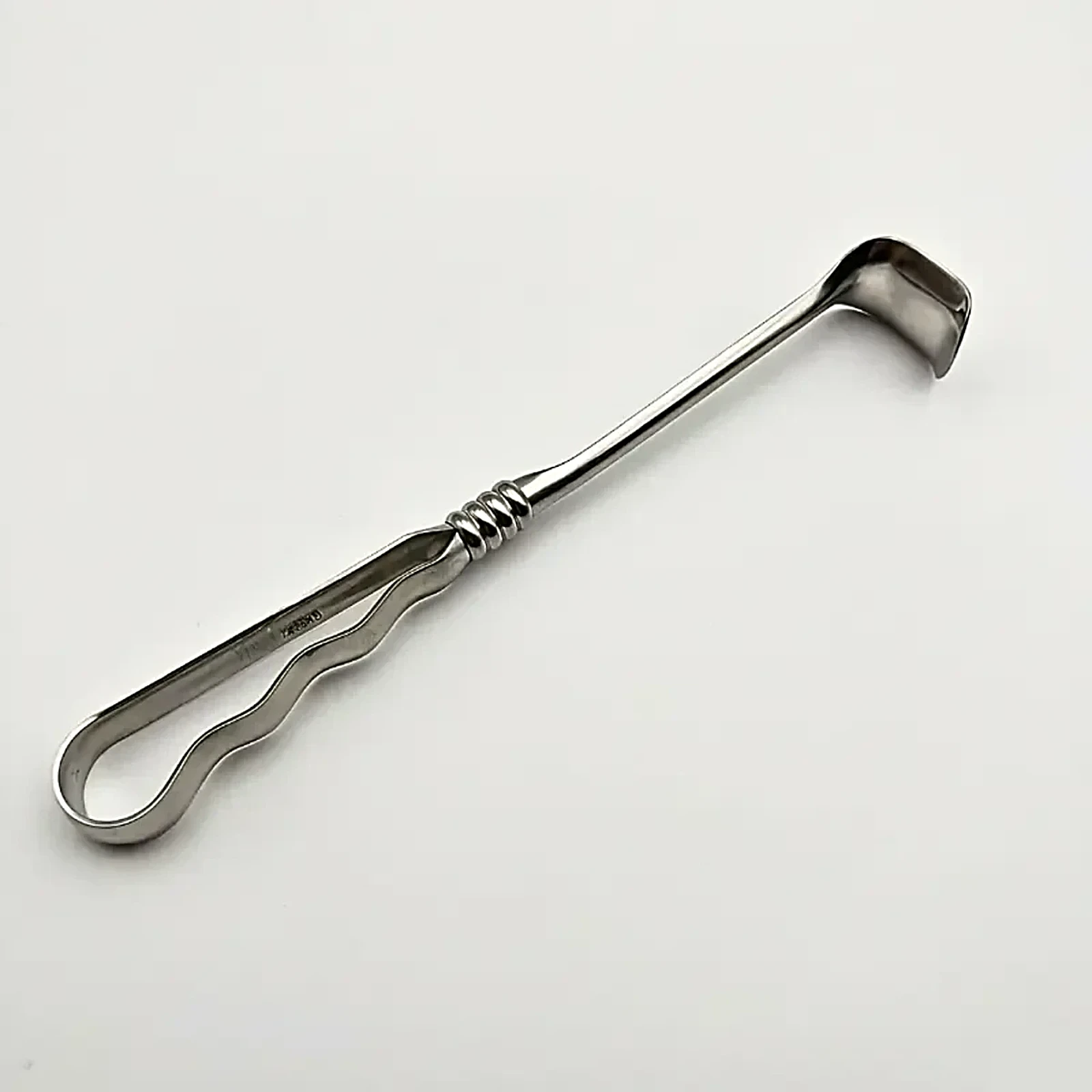
A deep abdominal retractor with a loop handle that gives the assistant a secure grip during long cases. Our Kelly Retractor is 10 inches long with a 1.5 x 2 inch deep blade.
Yancoskie and Saldanha retractors
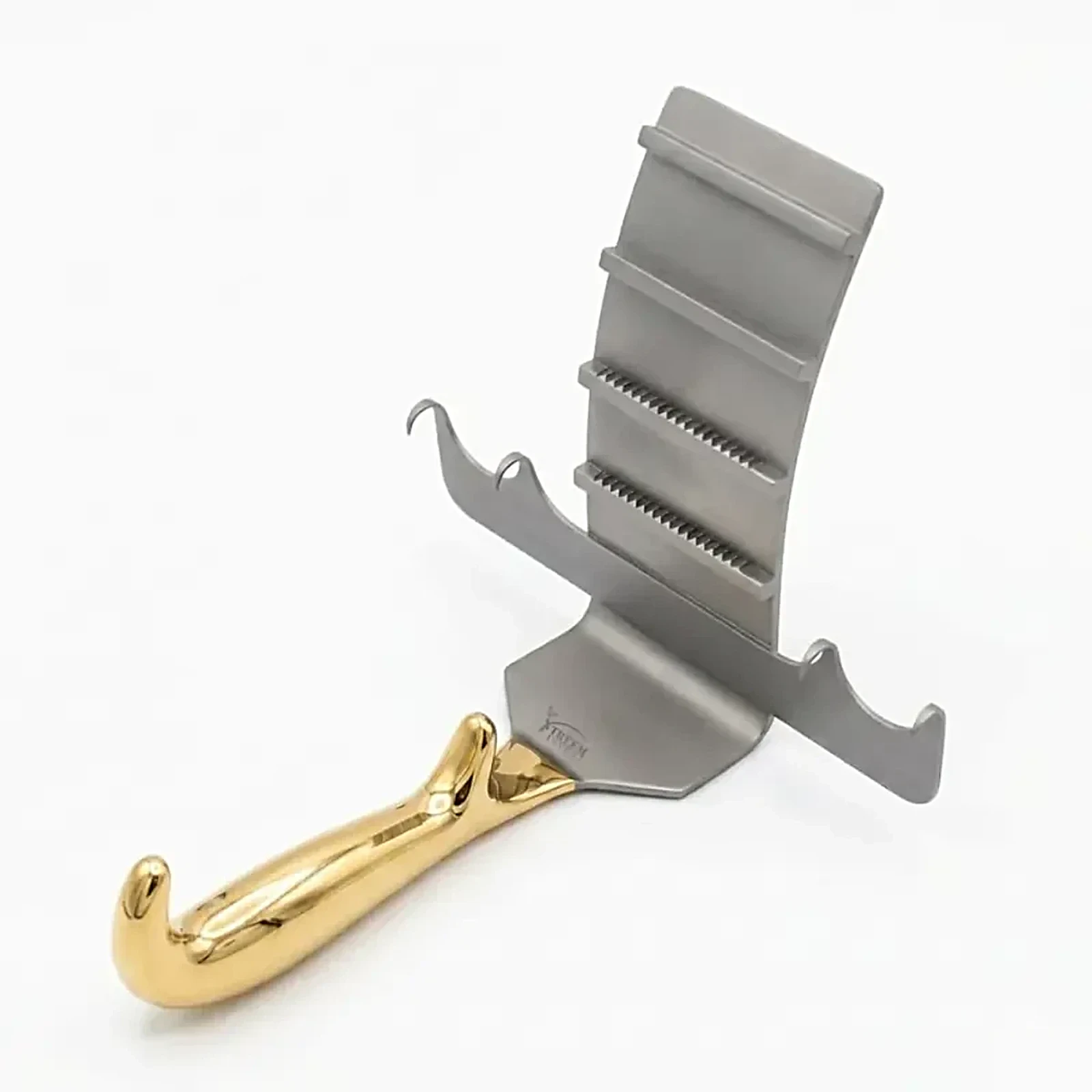
Wide, multi-pronged retractors designed for abdominoplasty (tummy tuck) and other body contouring surgery, where a large skin and fat flap has to be lifted. The Yancoskie Abdominal Retractor has a 6-prong blade about 6 inches wide on a 7.5 inch body. The Saldanha Abdominal Retractor uses a wide pronged blade that grips heavy tissue without slipping. For the cannulas used in body contouring, see our liposuction cannulas guide.
Plastic and breast surgery retractors
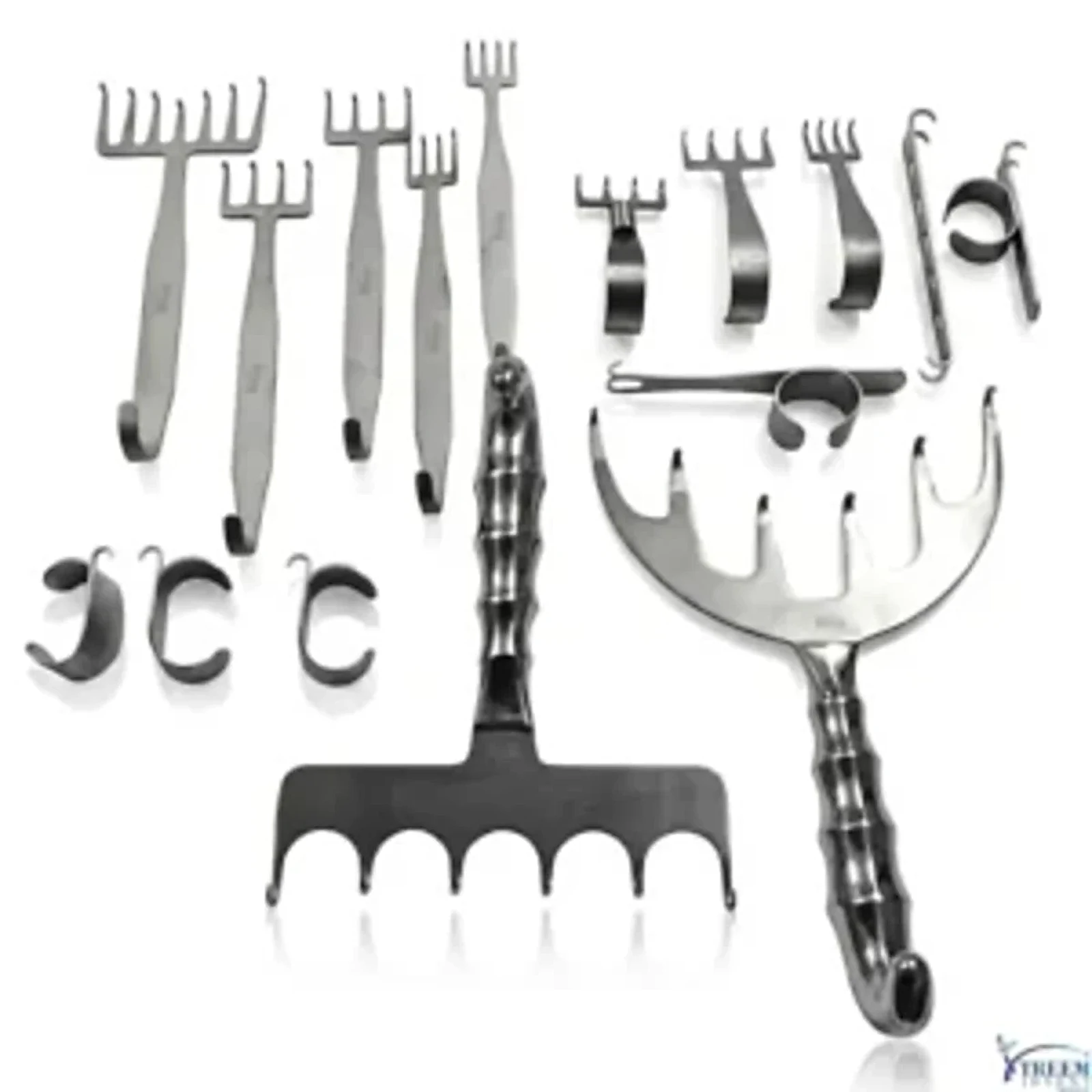
- Rake retractors have several prongs, sharp or blunt, that spread the pull across the tissue. Our Freeman Rake Retractors Set gives a range of prong patterns for plastic and reconstructive work.
- Skin hooks are the finest retractors of all, used to lift skin edges with very little damage. See our Plastic Surgery Skin Hook Set.
- Biggs mammaplasty retractors have a strongly curved shaft that follows the contour of the breast; some versions add fibre-optic light and suction. See our Biggs Retractor and the breast surgery instruments guide.
Urology retractors
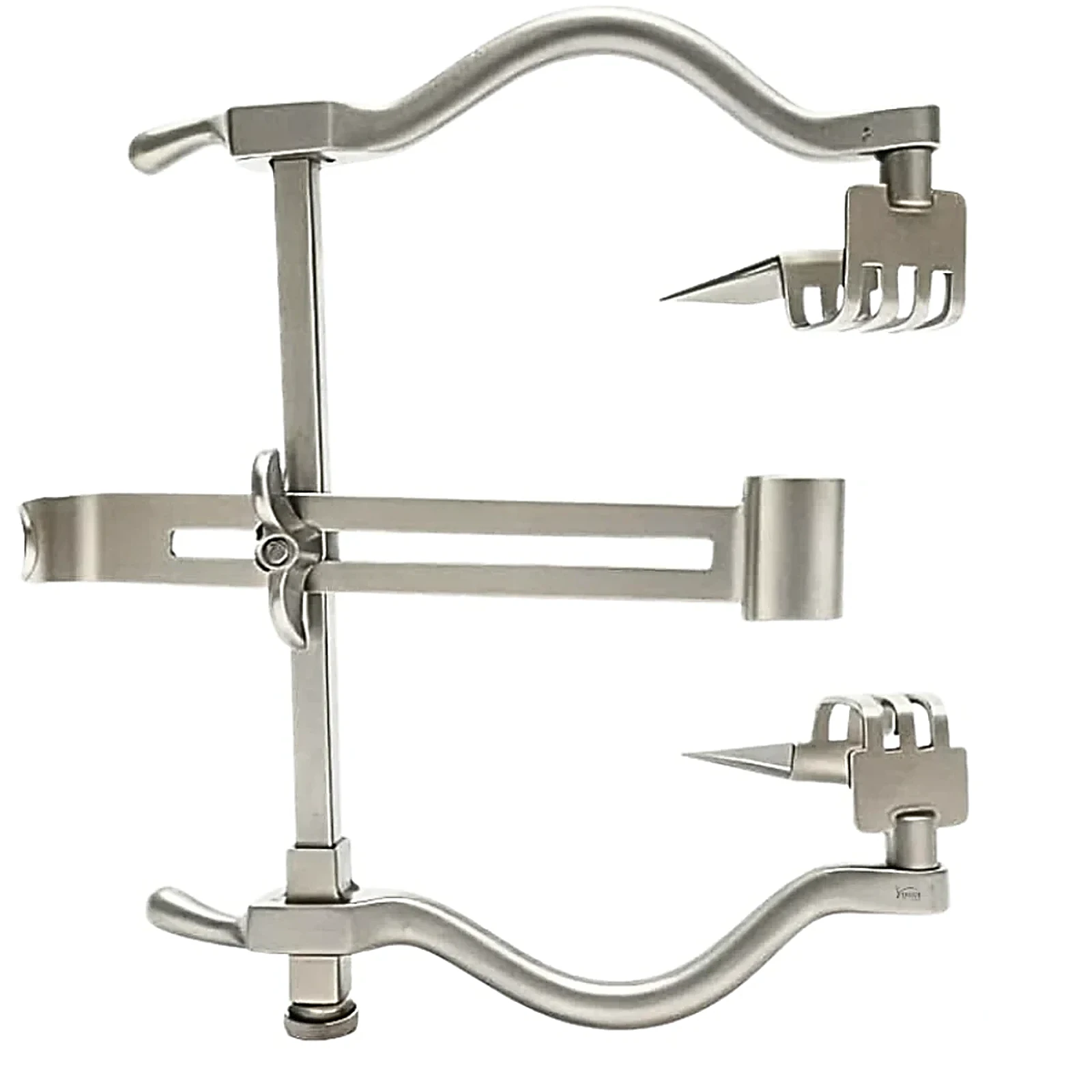
- Young prostatic retractors are hand-held retractors used to expose the prostate in open prostate surgery. They come with lateral, bifid (forked) and anterior blades. See our Young Bifid Retractor.
- Masson-Judd bladder retractors are self-retaining frames with swivel blades that hold the bladder open in urological and pelvic surgery. See our Masson-Judd Retractor.
- Hryntschak bladder retractors are frame-type bladder retractors used for exposure in open bladder and pelvic surgery. See our Hryntschak Bladder Retractor.
Orthopaedic retractors
Orthopaedic retractors must hold muscle and bone against strong pull, so they are heavier and often have pointed or toothed tips that hook around bone. Common patterns include the Hohmann, the Aufranc Cobra used in hip surgery, and clawed rake retractors. See our Anderson Bear Claw Retractor, the Modified Hohmann Retractor and our Aufranc Cobra retractor guide.
Neurosurgery and thoracic instruments
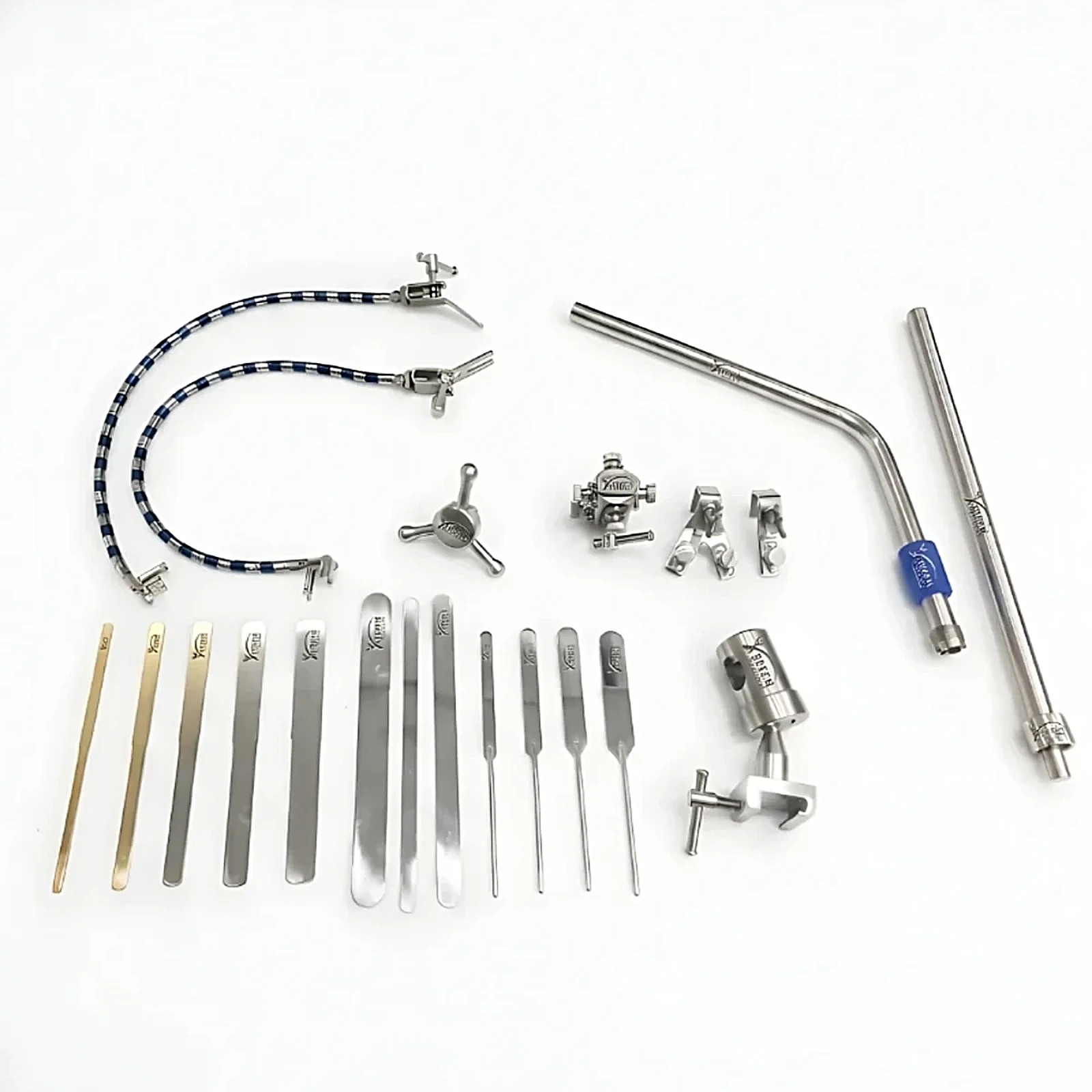
In brain surgery, tissue must be held back very gently and very steadily for a long time, which no assistant can do by hand. The Leyla system uses flexible arms fixed to a clamp on the operating table to hold small retractor blades in place. See our Complete Leyla Brain Retractor Set.
In chest surgery the job at the end of the operation is the opposite of retraction: a rib approximator draws the ribs back together to close the chest. See our Bailey Rib Approximator.
What to check when buying retractors
- Blade size: width, depth and overall length should be listed for every retractor, so you can match the patient and the wound.
- Tips: sharp or blunt prongs, smooth edges with no burrs, and prongs that are evenly spaced and aligned.
- Satin finish to cut glare from theatre lights.
- Handle comfort: hollow or loop handles reduce hand fatigue for assistants holding a retractor for a long time.
- Strength: deep and orthopaedic retractors must not bend under load.
- Accessories: fibre-optic light guides or suction where needed, and spare blades for frame retractors.
- Stainless steel finished with passivation so it resists rust after repeated autoclaving.
Care and maintenance
Clean retractors soon after use, paying attention to the gaps between rake prongs, hinges and swivel joints, where tissue collects. Lubricate the moving parts of frame retractors with instrument lubricant, check that ratchets and locks hold firmly, and look for bent prongs or cracked blades before sterilising. Read more in how to clean and maintain surgical instruments.
Frequently asked questions
What is the difference between a hand-held and a self-retaining retractor?
A hand-held retractor must be held by someone throughout the operation, but it can be repositioned instantly. A self-retaining retractor locks open on its own, freeing the assistant and giving steady exposure.
What is an Army-Navy retractor used for?
It is a double-ended hand-held retractor with two flat blades of different lengths, used, often in pairs, to hold back skin and the tissue beneath it in shallow incisions.
Which retractor is used for a tummy tuck?
Wide, multi-pronged abdominoplasty retractors such as the Yancoskie and Saldanha are designed to lift the large skin and fat flap in abdominoplasty and body contouring surgery.
Should I choose sharp or blunt rake retractors?
Sharp prongs grip skin and firm tissue securely; blunt prongs are safer near vessels and nerves. Many sets include both.
Are surgical retractors reusable?
Yes. Stainless steel retractors are reusable and autoclavable. Inspect prongs, blades and locking parts before each use and replace any that are bent or cracked.
Related guides
More guides: see all our surgical instrument buying guides.
Have a question or need a quote? Contact our team.

Chief Executive Officer (CEO)
Zi-Jah Chaudery is the Chief Executive Officer (CEO) at Xtreem Invent, bringing over 20 years of core expertise in the surgical instruments and medical devices manufacturing sector. A visionary leader in international trade and global B2B healthcare exports, he specializes in supply chain management, compliance, and international quality standards. Under his leadership, Xtreem Invent connects premium Pakistani manufacturing with healthcare facilities worldwide.