Blog

ENT surgery covers the ear, nose and throat, and each area uses its own family of instruments. This guide covers the ear (otology microsurgery such as tympanoplasty) and the throat (tonsillectomy and adenoidectomy), plus the snares used across all three areas. For nasal surgery, see our septoplasty and rhinoplasty guides.
Ear instruments: tympanoplasty and micro ear surgery
Tympanoplasty repairs a perforated eardrum and is done under an operating microscope, working through the narrow ear canal. Ear instruments are therefore long, slim and often angled, with very fine tips, so the surgeon’s hand stays out of the line of sight. Satin or matte finishes help reduce glare under the microscope light.
| Instrument | What it is used for |
|---|---|
| Ear speculum (e.g. Hartmann) | Holds the ear canal open; sets usually include several diameters |
| Round knife (Rosen circular knife) | Raises the skin flap of the ear canal; its blunt blade presses on small vessels, which reduces bleeding |
| Sickle knife, micro needles and picks | Freshen the edges of the perforation, lift tissue and spread the graft into place |
| Micro ear scissors (e.g. Bellucci) | Make very fine cuts in the eardrum and small middle-ear structures |
| Micro ear forceps (cup, alligator) | Hold and position the graft, and grasp small pieces of tissue, ossicles or ventilation tubes |
| Micro suction tubes | Keep the field clear of blood and fluid |
| Curettes, elevators and nippers | Remove bone and tissue in more advanced middle-ear work |
Tympanoplasty Instruments Set 30 PCS
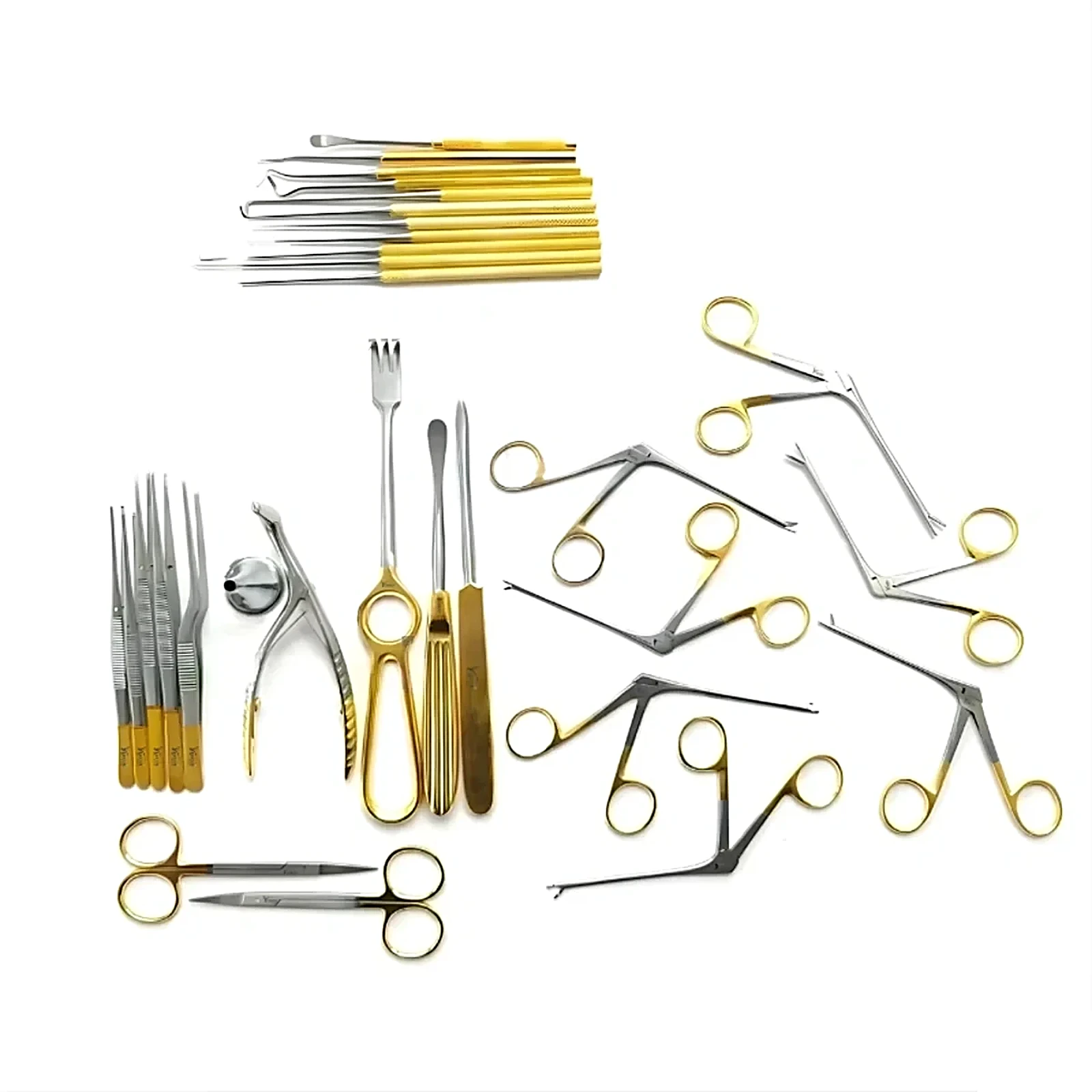
Includes dissecting and tissue forceps, micro iris scissors, ear speculums in more than one size, Rosen probes, round knives, micro ear forceps, picks, retractors and an elevator, with tungsten carbide inserts in the scissors. View the Tympanoplasty Instruments Set.
Micro Ear Pick Needles Set
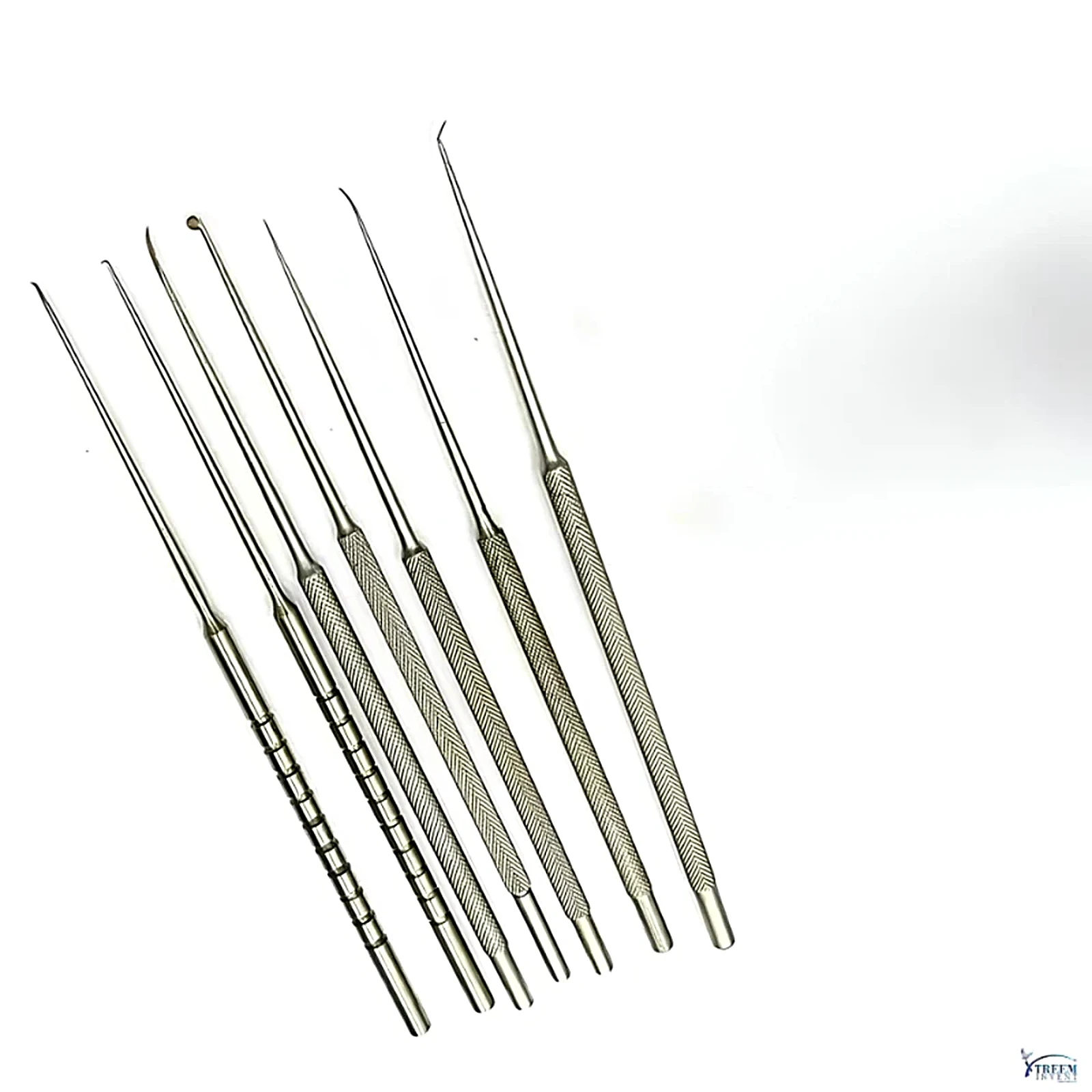
Seven fine-tipped micro ear picks for ear canal examination, delicate tissue handling and wax removal under the microscope. View the Micro Ear Pick Needles Set.
Throat instruments: tonsillectomy and adenoidectomy
Tonsil and adenoid surgery is done through the open mouth, so the tray is built around exposure. The exact instruments vary from hospital to hospital, but most trays include the following:
| Instrument | What it is used for |
|---|---|
| Mouth gag with tongue blades (Boyle-Davis or Crowe-Davis, McIvor, Jennings, Dingman) | Holds the mouth open and the tongue down; several blade sizes are needed for children and adults |
| Tonsil knife and dissector (e.g. Fisher) | Cuts and dissects the tonsil away from its bed |
| Pillar retractor and dissector (e.g. Hurd) | Holds back the palate and tonsil pillars and helps dissect the tonsil |
| Tonsil-holding forceps | Grip the tonsil while it is dissected |
| Tonsil hemostats (e.g. Schnidt) | Clamp small vessels deep in the wound and hold tonsil sponges |
| Tonsil snare | Cuts through the base (pedicle) of the tonsil at the end of the dissection |
| Adenoid curettes (e.g. Beckmann, Barnhill) | Scrape the adenoid tissue from the back of the nose; supplied in a range of sizes |
| Tongue depressor, uvula retractor, laryngeal mirrors and suction | Improve the view and keep the field clear |
Surgeons often choose the adenoid curette size by measuring it against the patient’s upper front teeth, which is why trays carry several sizes.
Tonsillectomy and Adenoidectomy Kit
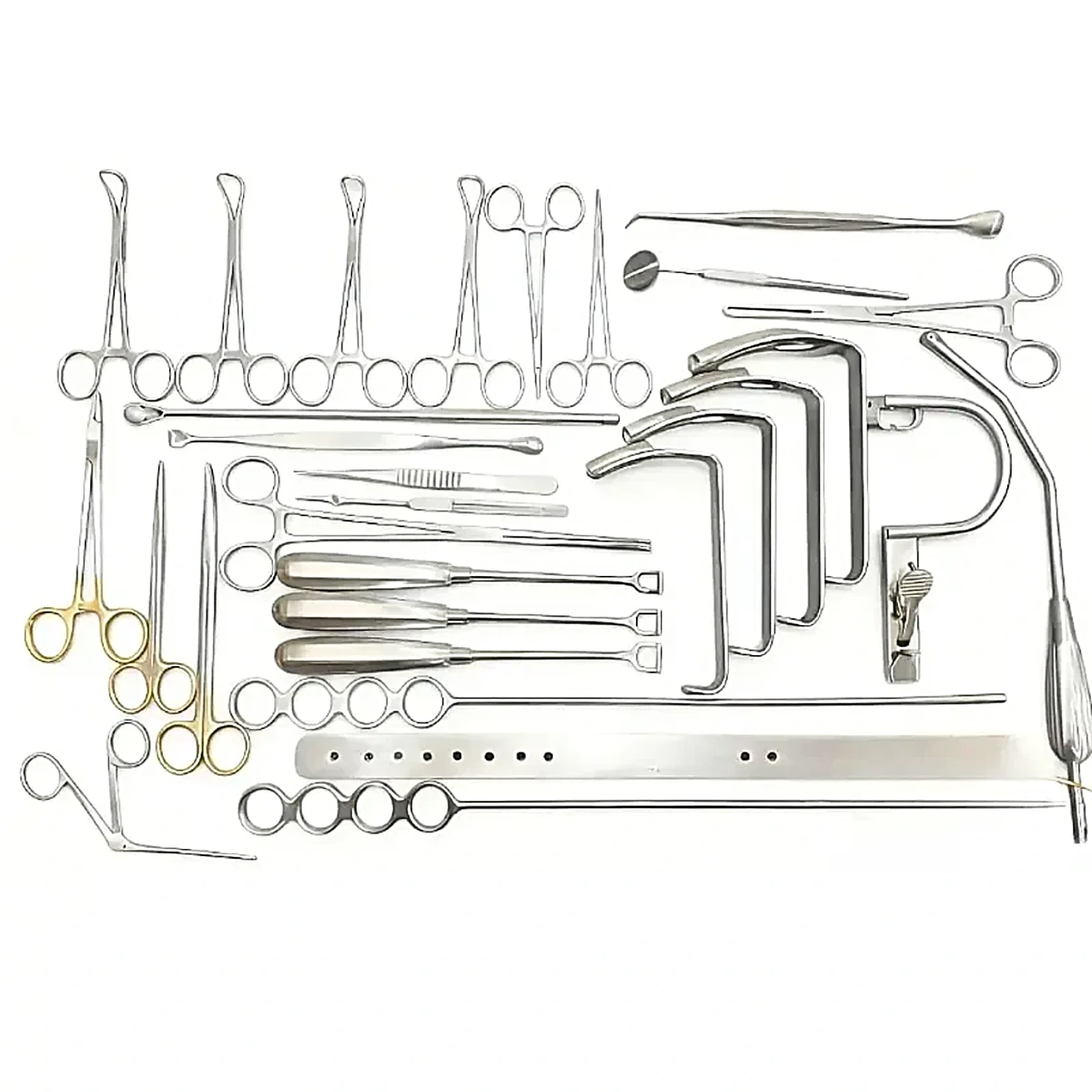
A 30-piece ENT kit for tonsil and adenoid surgery, covering exposure, grasping, dissection and excision. View the Tonsillectomy and Adenoidectomy Kit. For surgery on the palate, see our cleft palate repair instruments set.
ENT snares: tonsil, nasal and ear
A snare is a slim tube with a loop of fine wire at the tip. The surgeon passes the loop around the tissue, then slides a finger ring back to close the loop. The wire is blunt, so it crushes as it cuts, which helps limit bleeding. Different shapes suit different areas:
- Tonsil snares (such as Eve and Brunings) are long, with a large loop, and are used to separate the tonsil at its base after dissection.
- Polypus snares (such as Lange-Wilde) have a slim, slightly angled shaft for removing nasal polyps, and can also be used for ear polyps.
- Aural snares (such as Ballance) are fine snares for polyps in the ear canal.
Snare wire is a consumable, so ask for spare wire with the set. Wire comes in different thicknesses, with thicker wire used for larger masses.
ENT Surgical Snare Set
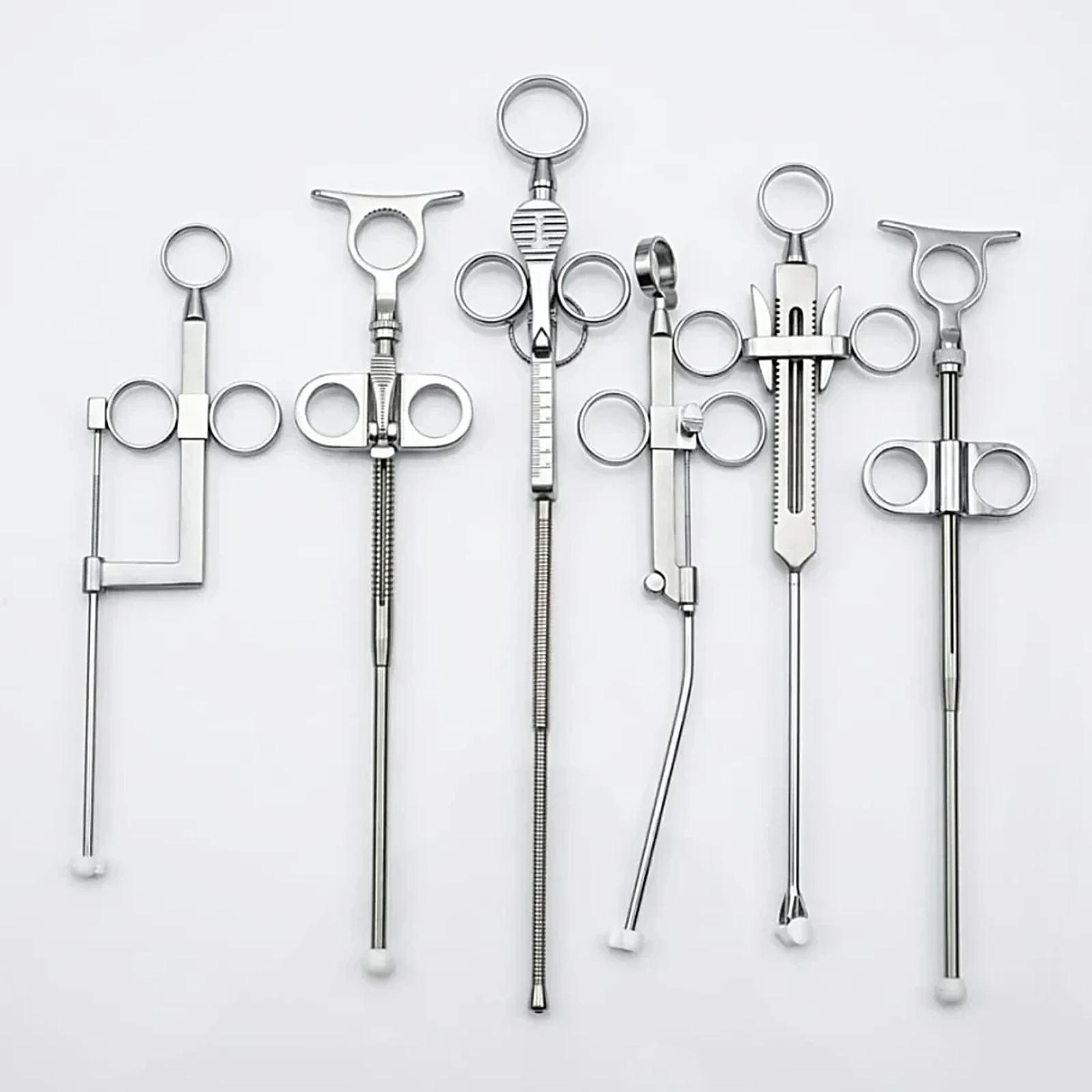
Includes Eve’s, Bruenings and Nievert tonsil snares, a Lange-Wilde polypus snare, a Ballance aural snare and a Rumel tourniquet. View the ENT Surgical Snare Set.
What to check when buying ENT instruments
- Tip alignment: micro forceps jaws should meet exactly and micro scissors should cut cleanly right to the tip. Ask for inspection under magnification.
- Glare-free finish on instruments used under the microscope.
- Tungsten carbide inserts in scissors and needle holders for longer-lasting cutting edges and grip.
- A full contents list with pattern names and sizes: speculum diameters, curette sizes and mouth gag blade sizes.
- Spare snare wire and spare tongue blades.
- Stainless steel finished with passivation and a tray or case that protects fine tips.
Care of micro ear instruments
Micro ear instruments are easily damaged. Keep them in a separate tray or rack away from heavy instruments, use tip protectors, and never drop them into a basin. Clean suction tubes through their full length straight after use, and check tips under magnification before each case. More tips are in our guide on how to clean and maintain surgical instruments.
Frequently asked questions
What instruments are in a tympanoplasty set?
A typical set includes ear speculums, a round knife, sickle knife, micro needles and picks, micro ear scissors, cup and alligator micro forceps, micro suction tubes and fine tissue forceps. Larger sets add curettes, elevators and nippers.
What is the difference between a tonsil snare and a polypus snare?
A tonsil snare is longer with a bigger loop, made to cut through the base of the tonsil. A polypus snare has a slimmer, slightly angled shaft and a smaller loop for nasal or ear polyps.
Why do tonsillectomy sets include several mouth gag blades and adenoid curettes?
Patients range from small children to adults, so the tongue blade and curette have to fit the size of the mouth and nasopharynx. Several sizes let the surgeon choose the right one for each patient.
Can micro ear instruments be autoclaved?
Yes. Stainless steel ENT instruments are reusable and autoclavable. Protect the fine tips during cleaning and sterilisation, and inspect them before reuse.
Related guides
More guides: see all our surgical instrument buying guides.
Have a question or need a quote? Contact our team.

Chief Executive Officer (CEO)
Zi-Jah Chaudery is the Chief Executive Officer (CEO) at Xtreem Invent, bringing over 20 years of core expertise in the surgical instruments and medical devices manufacturing sector. A visionary leader in international trade and global B2B healthcare exports, he specializes in supply chain management, compliance, and international quality standards. Under his leadership, Xtreem Invent connects premium Pakistani manufacturing with healthcare facilities worldwide.