Blog

Septoplasty straightens the septum, the wall of cartilage and bone that divides the two sides of the nose. The surgeon works through the nostril, so the instruments are long and slim: specula to see inside, elevators to lift the lining, and forceps and scissors to trim bent cartilage and bone. This guide explains the main septoplasty instruments, the instruments used to set a broken nose, and what to check before you buy.
Septoplasty instruments by group
| Group | Examples | What they do |
|---|---|---|
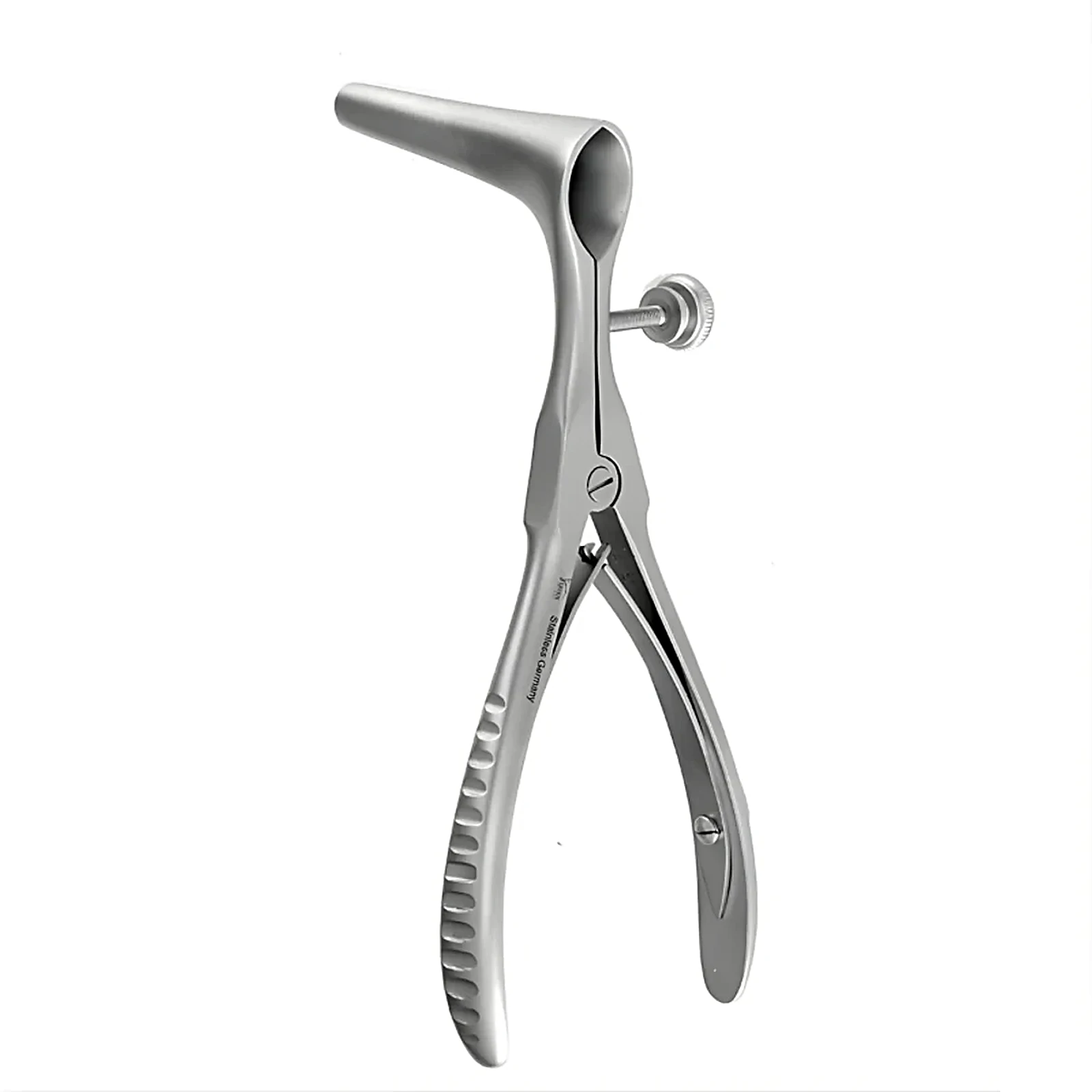
| Nasal specula | Killian and Cottle specula | Hold the nostril open so the surgeon can see the septum |
| Elevators | Freer and Cottle elevators | Lift the lining of the septum off the cartilage and bone |
| Septum forceps | Jansen-Middleton forceps | Take small bites of bent cartilage and bone and hold them in the cup |
| Septum scissors | Caplan scissors | Cut septal cartilage through the nostril |
| Straightening forceps | Asch and Walsham forceps | Move a fractured septum and nasal bones back into line |
Nasal specula: Killian or Cottle?
The Killian nasal speculum (13 cm) has broader blades and comes in five blade lengths: 35 mm for examining and working near the front of the nose, 55 and 65 mm for general surgery, and 75 and 90 mm to reach deep along the septum, which is why the long blades are a standard choice for septoplasty. The Cottle speculum (14 cm) has slimmer blades in 20, 30, 40 and 60 mm and spreads the nostril with less bulk. Most ENT trays carry a short and a long speculum.
Septum forceps and scissors
The Jansen-Middleton forceps has cupped jaws with sharpened edges. Each bite removes a small piece of bent cartilage or bone and holds it in the cup until the forceps is withdrawn. We make it at 19 cm, a length that reaches the back of the septum with the handles outside the nose, and in a spoon-shaped cup pattern.
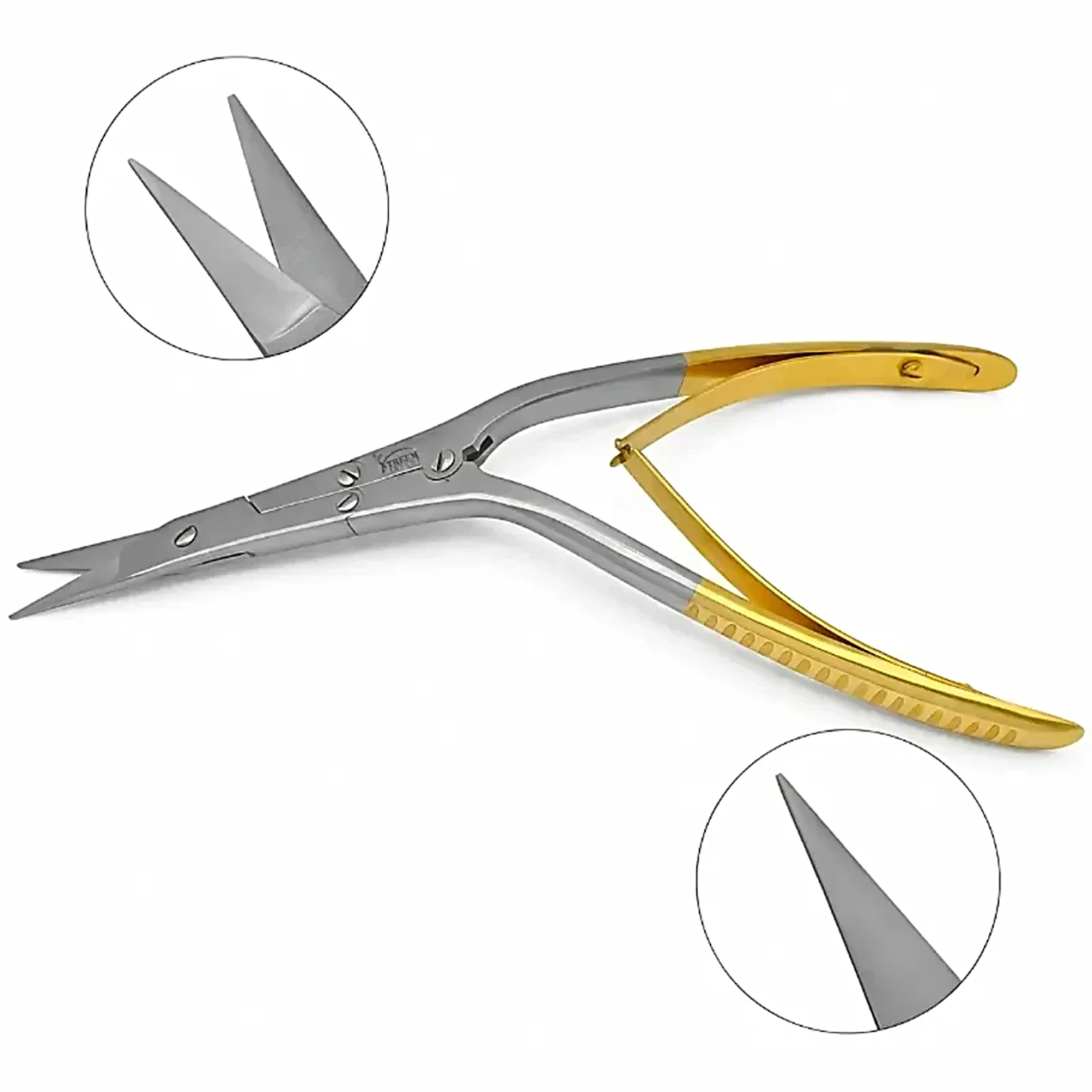
The Caplan septum scissors are angled so the surgeon can cut deep inside the nose with the handles out of the line of sight. Their serrated blades stop tough septal cartilage slipping, and tungsten carbide inserts, marked by gold handles, keep the edges sharp much longer than plain steel.
Setting a broken nose: Asch and Walsham forceps
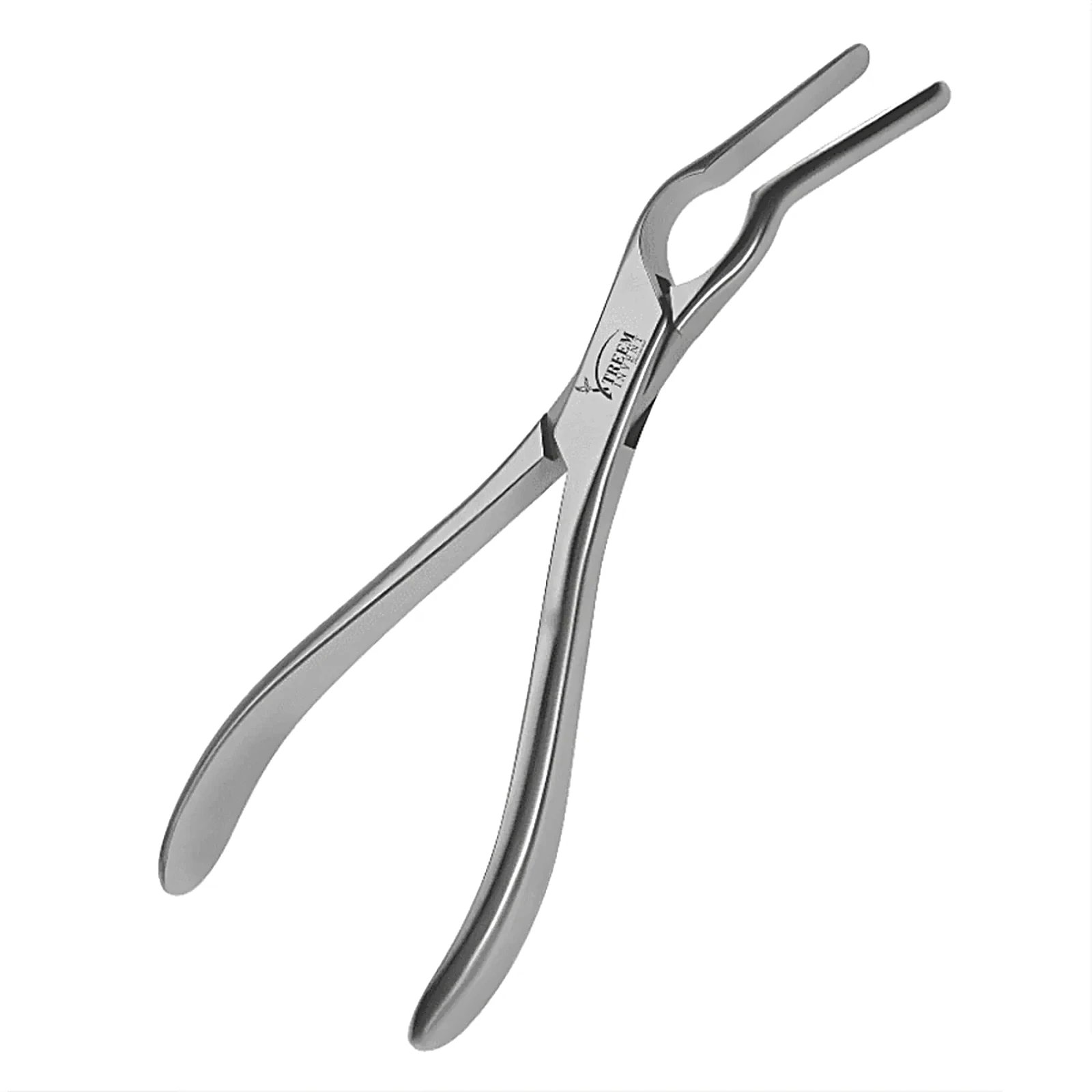
After a nasal fracture, the nasal bones and the septum can be pushed out of line. The Walsham forceps moves fractured nasal bones back into place: one blade goes inside the nostril and the outer blade rests on the skin, so the bone can be gripped and repositioned. It comes in left, right and universal versions. The Asch forceps has two flat blades that sit either side of the septum; the surgeon closes them to grip it and move it back to the midline. Both are 23 cm long and are often used together in the same procedure.
When septoplasty is combined with rhinoplasty
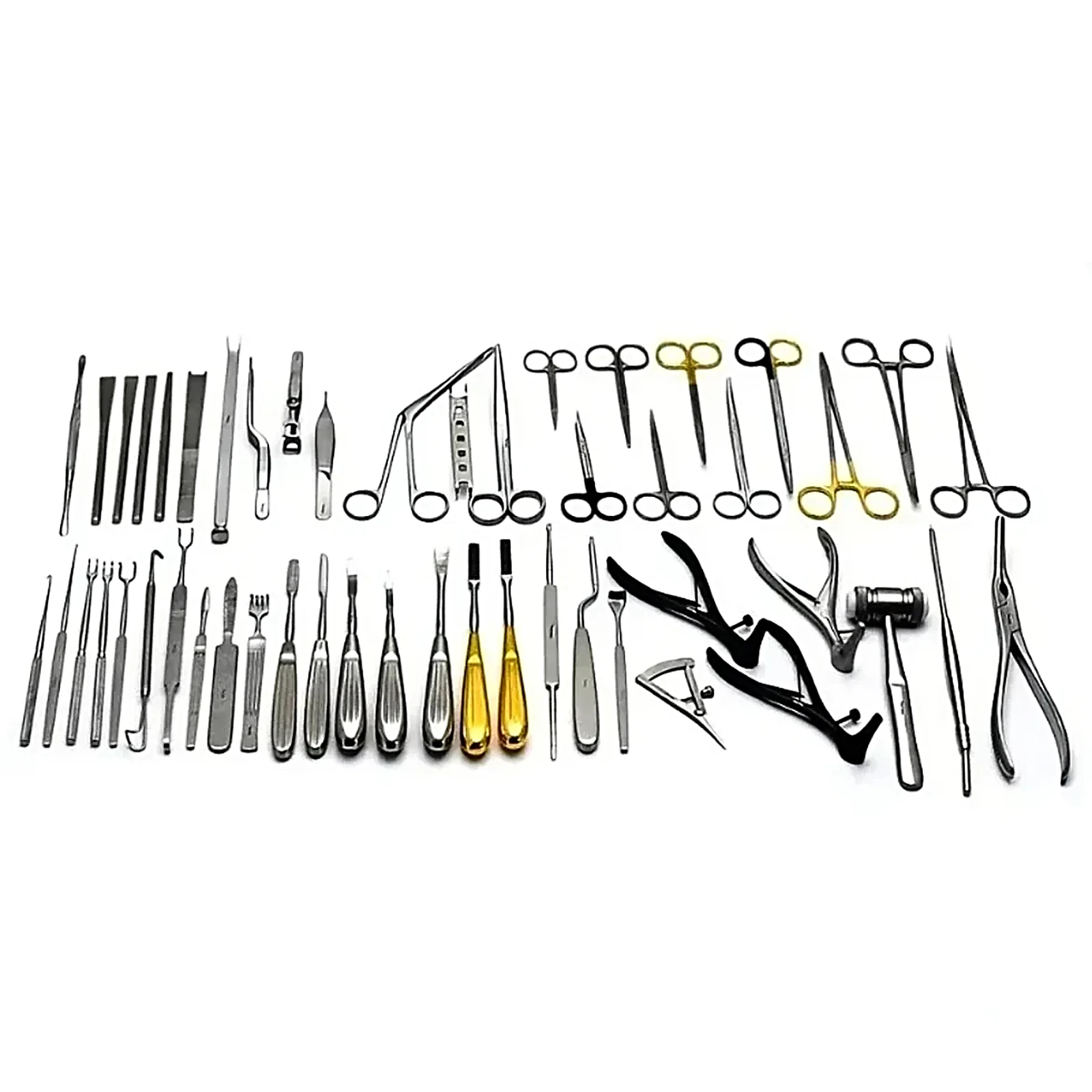
Many patients have septoplasty and rhinoplasty together, called septorhinoplasty. The tray then also needs retractors to lift the skin of the nasal bridge, such as the Aufricht retractor with suction, the fiber optic Aufricht retractor and the Converse retractor, and instruments for the bone: Fomon nasal rasps, the 8-piece Tebbetts nasal osteotome set and Rowland nasal hump forceps. The 47-piece Major Nasal Set covers septoplasty and rhinoplasty in one tray. Read our rhinoplasty instruments guide for more.
How to choose septoplasty instruments
- Carry at least one short and one long nasal speculum.
- Choose Caplan scissors with tungsten carbide inserts for longer-lasting edges.
- For nasal fractures, keep a left and right Walsham pair or a universal Walsham, with an Asch forceps.
- If you also do rhinoplasty, a complete set such as the 47-piece Major Nasal Set saves building a tray from single orders.
- Ask for the full contents list, or send your own list and we will build the set.
Care and maintenance
Rinse instruments straight after surgery. Clean the cups of septum forceps and the serrations of scissors carefully, as cartilage and bone debris lodges there, and brush rasp teeth thoroughly. Check that speculum blades open evenly and cutting edges are sharp, and sterilise according to your hospital’s protocol. Cup forceps can be resharpened.
Septoplasty instruments from Xtreem Invent
We make ENT and nasal surgery instruments in our own factory in Sialkot, Pakistan, and supply surgeons, hospitals and distributors in the USA and worldwide. See all ENT instruments, ENT instrument sets and rhinoplasty instrument sets. For your own patterns or brand, see custom instruments and OEM and private label.
Frequently asked questions
What instruments are used in septoplasty?
Mainly nasal specula, elevators to lift the septal lining, Jansen-Middleton forceps and septum scissors such as the Caplan. Setting a broken nose adds the Asch and Walsham forceps.
What is the difference between the Killian and Cottle specula?
The Cottle has slimmer blades. The Killian blades are broader and come in longer lengths, up to 90 mm.
What are Asch and Walsham forceps used for?
Setting a broken nose. The Walsham moves the nasal bones back into place and the Asch straightens the septum.
Do you ship ENT instruments to the USA?
Yes. Catalogue items are delivered in 15 to 25 working days.
Have a question or need a quote? Contact our team.

Chief Executive Officer (CEO)
Zi-Jah Chaudery is the Chief Executive Officer (CEO) at Xtreem Invent, bringing over 20 years of core expertise in the surgical instruments and medical devices manufacturing sector. A visionary leader in international trade and global B2B healthcare exports, he specializes in supply chain management, compliance, and international quality standards. Under his leadership, Xtreem Invent connects premium Pakistani manufacturing with healthcare facilities worldwide.