Blog

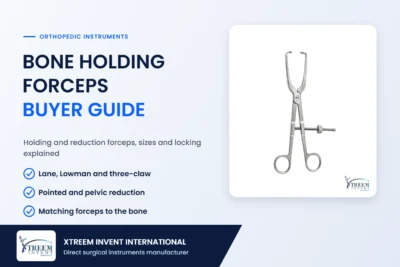
Bone holding forceps keep a bone or fragment still while the surgeon drills, places a plate or inserts a screw. Reduction forceps bring the pieces of a broken bone back into position and hold them there until fixation is applied. They are among the most used instruments in any trauma tray. This guide compares the main patterns, explains sizes and locking, and shows how to choose.
Bone holding and reduction forceps compared
| Pattern | Grip and locking | Sizes and options | Typical use |
|---|---|---|---|
| Lane | Serrated jaws | With or without ratchet | Gripping and steadying a long bone during fracture fixation |
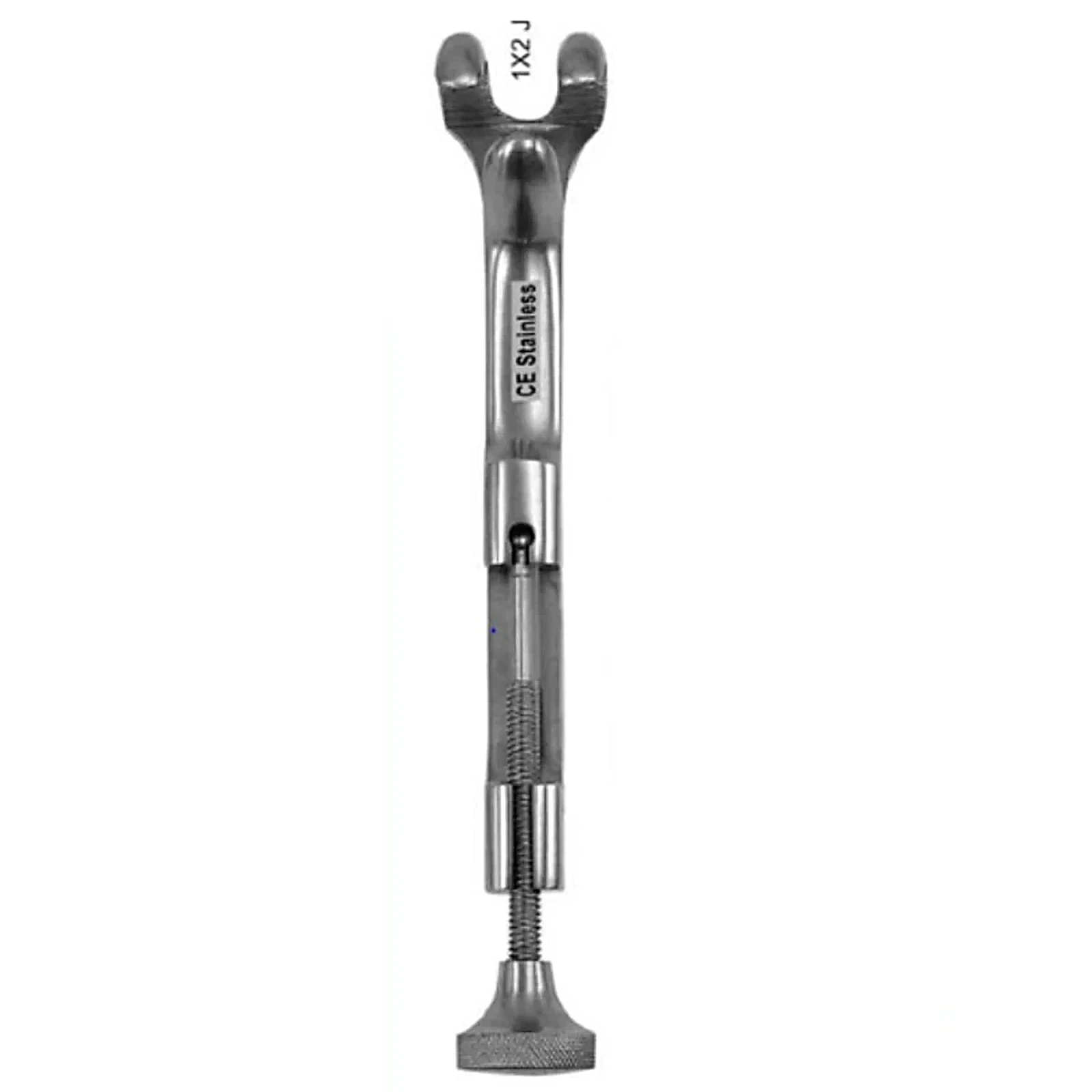
| Lowman clamp | Jaws closed by a screw | 12, 14, 18, 20 or 22 cm opening | Holding a long bone and a plate together while drilling and placing screws |
| Three-claw | Two claws on one side, one on the other; ratchet | Upper limb or lower limb pattern | Holding fragments without letting the bone rotate |
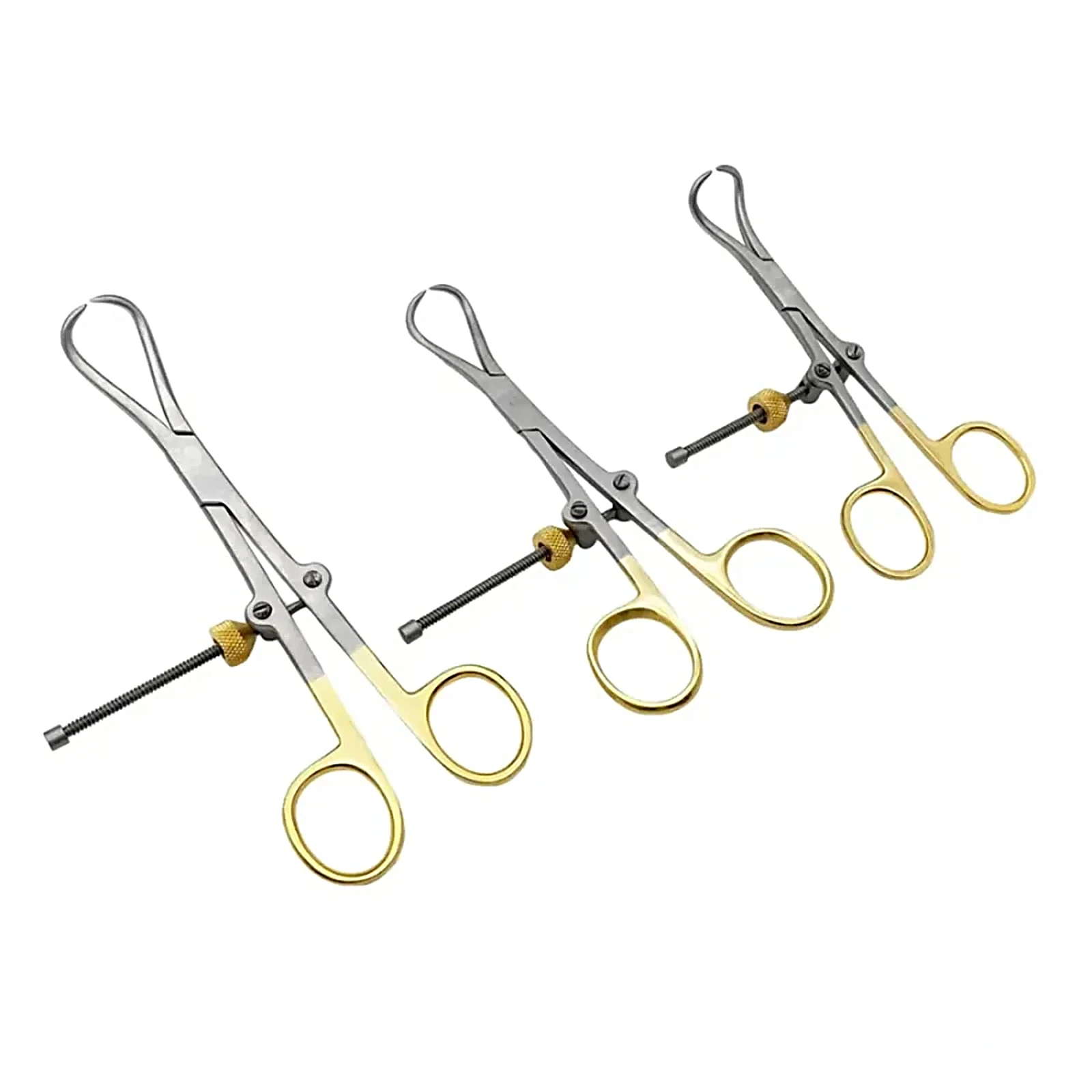
| Pointed reduction | Two sharp points; ratchet or speed lock | Small, medium, large or set of 3 | Holding fracture fragments together with little disturbance to the tissue |
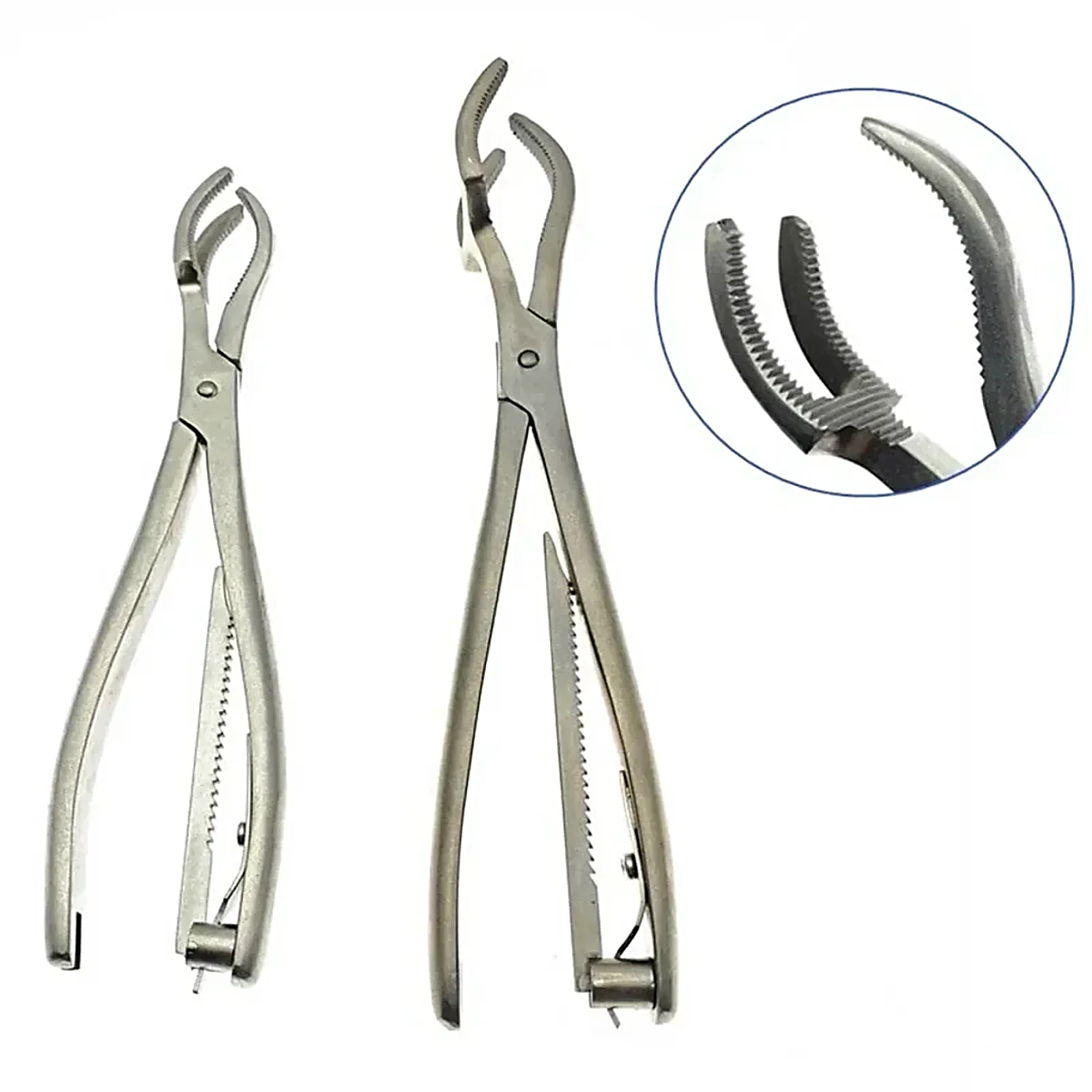
| Pelvic reduction | Ratchet | 25 cm, straight or angled | Reducing large, deep pelvic and acetabular fragments |
| Crab claw (phalanges) | Toothed jaws; ratchet | For small bones | Small bones of the hand and foot |
| Patella | Ratchet | Other sizes on request | Holding the kneecap during fracture fixation |
Locking: ratchet, screw or by hand
Most bone holding and reduction forceps lock with a ratchet, so they keep their grip while the surgeon’s hands are busy. The Lowman clamp closes with a screw mechanism and holds at the set grip. The Lane forceps comes with or without a ratchet: the ratchet version is the common choice for plating because it frees a hand, while the version without a ratchet gives a faster grip and release and more feel when repositioning a bone repeatedly.
Matching the forceps to the bone
Size matters, because a forceps that is too small will not hold a large bone securely. The Lowman clamp comes in five openings: 12 and 14 cm for the forearm and smaller long bones, 18 cm as a common general size, and 20 and 22 cm for the femur and other large bones. The three-claw forceps comes in a lighter upper limb pattern, for the humerus, radius and ulna, and a heavier lower limb pattern that opens wider for the femur and tibia. Pointed reduction forceps come small, for the hand, foot and other small bones, medium for the forearm, and large for long bones.
Reduction forceps for special areas
Pelvic fractures are deep and the fragments are large, so our pelvic reduction forceps is 25 cm long, in a straight version that reaches straight down into the wound and an angled version for fragments that lie at an angle to the incision. Pelvic trays usually carry both. For the small bones of the hand and foot, the crab claw phalanges reduction forceps has toothed jaws that stop it slipping on small, smooth bone. The patella bone holding forceps is made for holding the kneecap during fracture fixation, and our general bone holding forceps suits everyday trauma work.
Related instruments: cables, wires and pins
Bone holding forceps work alongside fixation instruments. For cerclage, the cable compression forceps tensions and holds a bone cable while it is locked; the cable is then cut with a separate cable cutter. For wires, pins and rods, see our double action tungsten wire cutter, cerclage wire twister and cutter, heavy duty pin cutter and spinal rod cutter.
How to choose bone holding forceps
- Size the forceps to the bone: small for the hand and foot, medium for the forearm, large for the femur and tibia.
- Choose the grip: serrated jaws (Lane), points (pointed reduction), three claws to stop rotation, or toothed jaws for small bones.
- Choose the locking: a ratchet frees a hand, and the Lowman screw clamp holds a plate to the bone while you drill.
- Pelvic and acetabular work needs long reduction forceps, straight and angled.
- Build a set, for example pointed reduction forceps in three sizes, a Lowman clamp and a Lane forceps.
Care and maintenance
Clean ratchets, box joints and serrations straight after surgery with the forceps fully open. Check that the ratchet engages and releases cleanly, that points and teeth are not bent, and that the Lowman screw turns freely. Lubricate the joints and sterilise according to your hospital’s protocol.
Bone holding forceps from Xtreem Invent
We make bone holding and reduction forceps in our own factory in Sialkot, Pakistan, and supply hospitals, surgeons and distributors in the USA and worldwide. See all general orthopedic instruments and our orthopedic surgical instruments, or read our orthopedic instruments list, orthopedic plate benders guide and bone rongeur guide.
Frequently asked questions
What are bone holding forceps used for?
To keep a bone or fragment still while the surgeon drills, places a plate or inserts screws.
What is the difference between bone holding and reduction forceps?
Bone holding forceps steady a bone. Reduction forceps bring the pieces of a broken bone back into their correct position and hold them there until fixation is applied. Many patterns do both.
Do bone holding forceps lock?
Most do, with a ratchet. The Lowman clamp tightens with a screw, and the Lane comes with or without a ratchet.
Which size should I order?
Match the forceps to the bone: small for the hand and foot, medium for the forearm and large for long bones. A set of sizes covers a trauma tray.
Do you ship bone holding forceps to the USA?
Yes. Catalogue items are delivered in 15 to 25 working days.
Have a question or need a quote? Contact our team.

Chief Executive Officer (CEO)
Zi-Jah Chaudery is the Chief Executive Officer (CEO) at Xtreem Invent, bringing over 20 years of core expertise in the surgical instruments and medical devices manufacturing sector. A visionary leader in international trade and global B2B healthcare exports, he specializes in supply chain management, compliance, and international quality standards. Under his leadership, Xtreem Invent connects premium Pakistani manufacturing with healthcare facilities worldwide.