Blog

Orthopedic surgery uses a lot of metal that has to be cut in theatre: Kirschner wires, cerclage wire, fixation pins and spinal rods. Each needs a cutter strong enough for it, and using the wrong one damages the cutter or leaves a rough end. This guide explains wire, pin and rod cutters, tungsten carbide and front-end patterns, and the twisters and tighteners used with cerclage wire.
Match the cutter to the metal
| Metal | Cutter | Our options |
|---|---|---|
| Fine wire and K-wire | Wire cutter, ideally tungsten carbide | Double action tungsten wire cutter (15, 18 or 23 cm; straight or angled) and the K-wire and pin cutter set |
| Wire and small pins | Combined wire and pin cutter | TC wire and pin cutter, 7 inch |
| Fixation pins | Pin cutter with heavier jaws | Orthopedic pin cutter and the heavy duty pin cutter in six lengths from 27 to 60 cm |
| Cannulated pins | Pin gripper cutter | TC cannulated pin gripper cutter (15 or 23 cm) and a front-end version |
| Spinal rods, 4.5 to 6.5 mm | Rod cutter | Orthopedic rod cutter, 46 cm |
Wire cutters
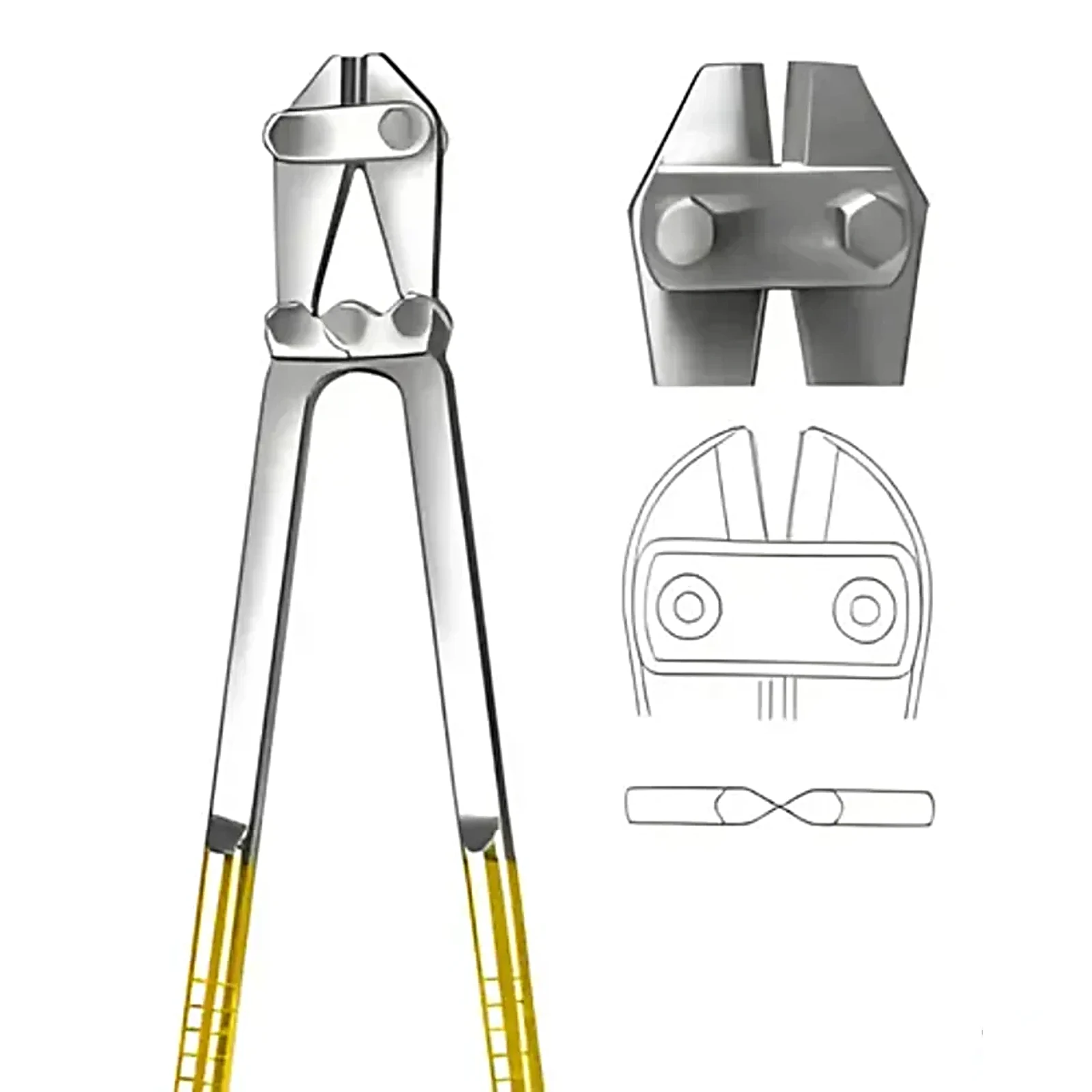
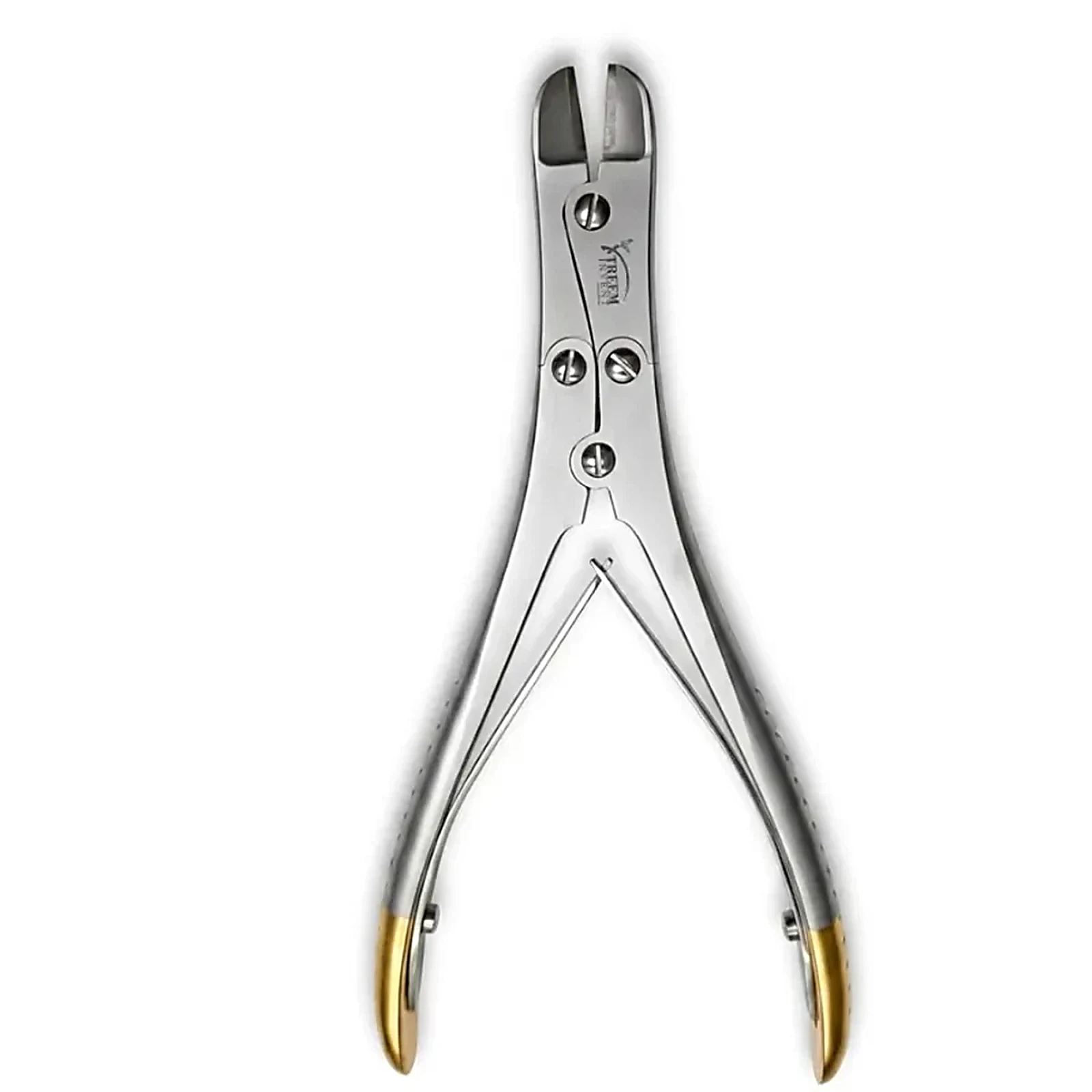
Surgical wire is hard enough to notch the blades of ordinary scissors, so wire needs a hardened cutter. Our double action tungsten wire cutter has two hinge points, which multiply the force at the jaws, and tungsten carbide inserts that stay sharp far longer than stainless steel. Choose 15 cm for fine wires in small fields, 18 cm as the general-purpose size, and 23 cm for thicker wire and deeper sites. A straight jaw suits open access, and an angled jaw cuts close to the bone where a straight cutter cannot sit flat. For a complete tray, the K-wire and pin cutter set groups cutters for Kirschner wires, Steinmann pins and fixation wires.
Pin cutters
Fixation pins are thicker and harder than wire, and they will damage a wire cutter. A pin cutter has heavier jaws and longer handles to shear a pin cleanly and leave a short, safe end. Our orthopedic pin cutter covers everyday pins, and the 7 inch TC wire and pin cutter handles both fine wire and smaller pins, so one instrument covers most cutting in a hand or foot tray. For the thickest pins, the heavy duty pin cutter has stronger jaws and joints and comes in six lengths: 27 and 30 cm for medium pins, 38 and 47 cm for thicker pins, and 56 and 60 cm for the most cutting force.
Cannulated and front-end pin cutters
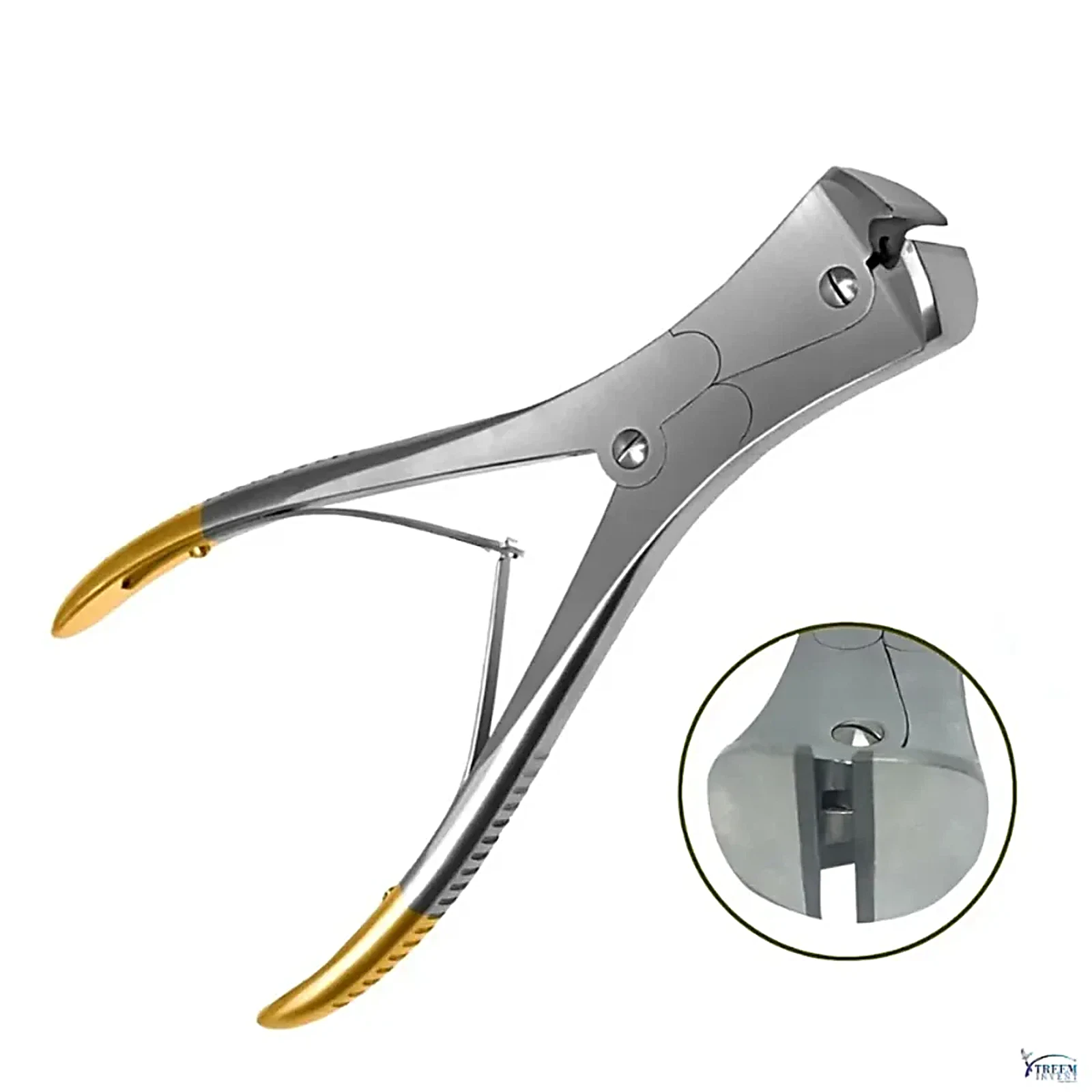
Cannulated pins are hollow. Our TC cannulated pin and gripper cutter grips and cuts them, with tungsten carbide cutting and gripping inserts, in a 15 cm size for small pins and shallow sites such as the hand and foot, or 23 cm for more leverage and reach. The front-end TC cannulated pin gripper cutter has its cutting edges across the tip of the jaws instead of along the side, so the surgeon can approach a pin head-on and cut it close to the bone where a side cutter cannot reach.
Spinal rod cutters
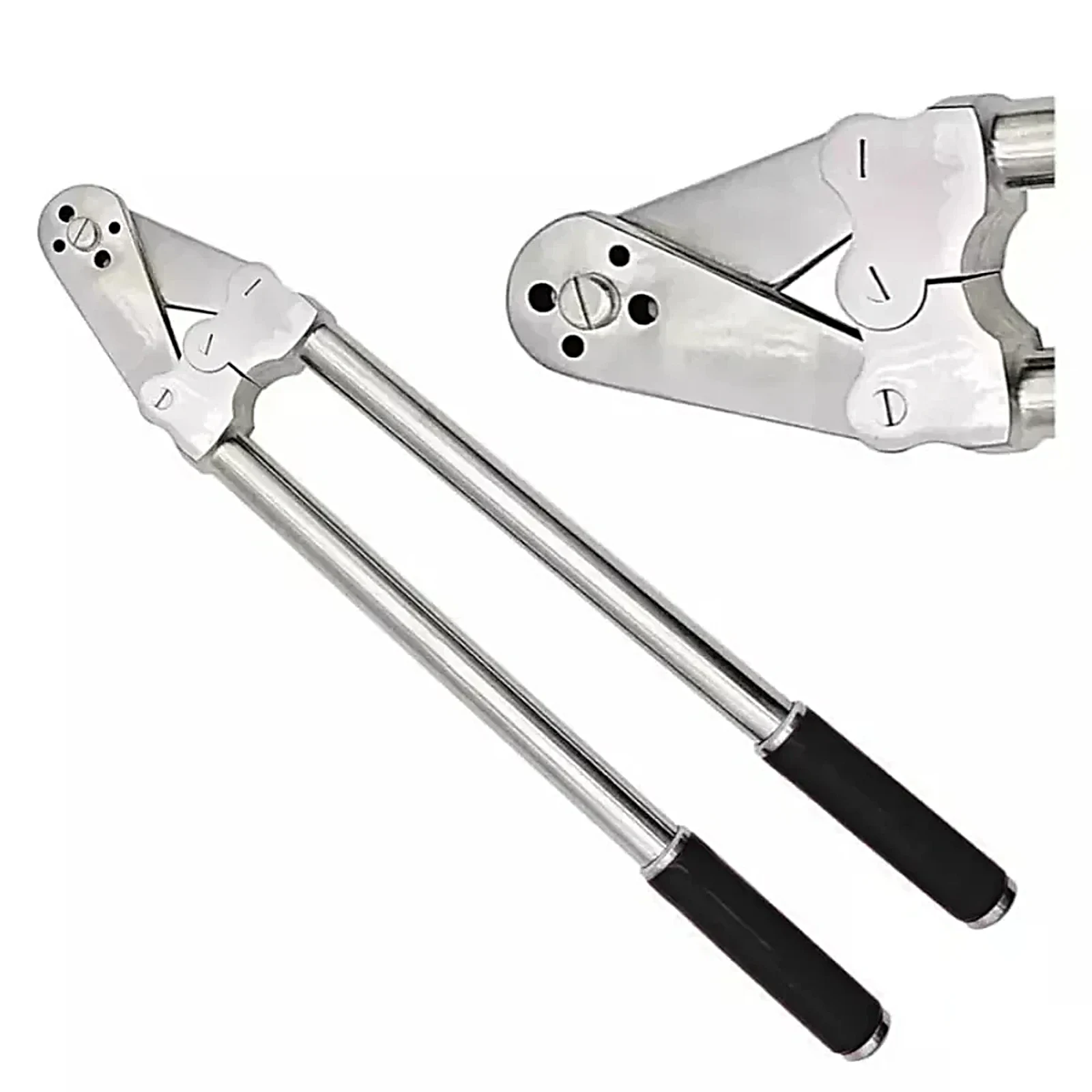
Spinal rods are thick, hard metal that ordinary cutters cannot handle. Our orthopedic rod cutter has 46 cm handles for leverage and jaws rated for rods from 4.5 to 6.5 mm, so a rod can be cut to length in theatre. Stay within the rated range, and check the rod end before implanting, as with any cutter.
Tightening and twisting cerclage wire
Cerclage wire is looped around a bone to hold fragments or a graft together, then tightened and twisted. The wire tightener grips the wire and draws it up steadily, so the surgeon reaches the tension wanted without kinking the wire. The 9 inch Jet wire twister grips both ends and turns them evenly for a tight, uniform twist, and the excess is then cut with a wire cutter. The cerclage wire twister and cutter does both jobs in one instrument. For bone cables, see the cable compression forceps in our bone holding forceps guide.
How to choose wire, pin and rod cutters
- Match the cutter to the metal: wire cutters for wire, pin cutters for pins and the rod cutter for spinal rods.
- Choose tungsten carbide for edges that stay sharp longer.
- Use longer handles for thicker metal, because more length means more leverage.
- Add a front-end cutter for cutting pins close to the bone.
- Tell us your wire gauge, pin diameter or rod size, and we will confirm the right cutter.
Care and maintenance
Never cut metal thicker than a cutter is rated for, and cut straight through without twisting: both can chip tungsten carbide inserts or spring the jaws. Clean the joints and jaws after use, lubricate the hinges, check that the jaws meet evenly, and sterilise according to your hospital’s protocol. Ask us about servicing when the edges wear.
Wire, pin and rod cutters from Xtreem Invent
We make orthopedic cutters in our own factory in Sialkot, Pakistan, and supply hospitals, surgeons and distributors in the USA and worldwide. See all general orthopedic instruments and our orthopedic surgical instruments, or read our orthopedic instruments list and spine surgery instruments guide.
Frequently asked questions
Can I cut pins with a wire cutter?
No. Pins are thicker and harder than wire and will damage a wire cutter. Use a pin cutter.
Why choose tungsten carbide?
Tungsten carbide inserts are much harder than stainless steel, so the cutting edges stay sharp far longer. Gold-coloured handles usually mark them.
What is a front-end cutter for?
Cutting a pin head-on, close to the bone, where a side cutter cannot reach.
What rod sizes does the rod cutter take?
Spinal rods from 4.5 to 6.5 mm.
Do you ship cutters to the USA?
Yes. Catalogue items are delivered in 15 to 25 working days.
More guides: see all our surgical instrument buying guides.
Have a question or need a quote? Contact our team.

Chief Executive Officer (CEO)
Zi-Jah Chaudery is the Chief Executive Officer (CEO) at Xtreem Invent, bringing over 20 years of core expertise in the surgical instruments and medical devices manufacturing sector. A visionary leader in international trade and global B2B healthcare exports, he specializes in supply chain management, compliance, and international quality standards. Under his leadership, Xtreem Invent connects premium Pakistani manufacturing with healthcare facilities worldwide.